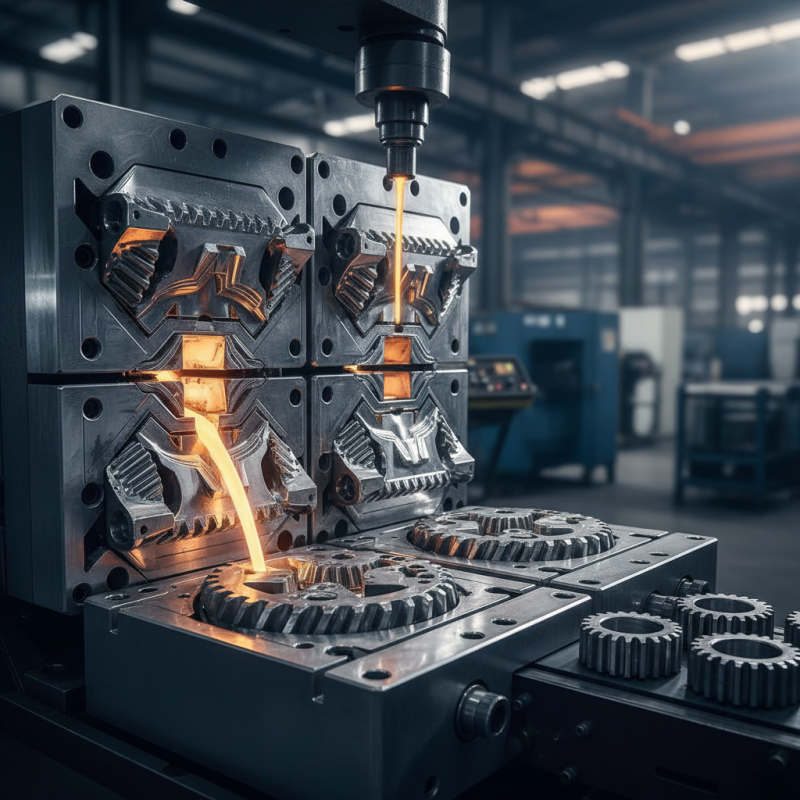
Die casting moulds play a vital role in mass production. They offer significant advantages that streamline the manufacturing process. The question arises, "What are the benefits of die casting moulds for mass production?" This inquiry leads us to explore their efficiency and effectiveness.
One major benefit is precise replication. Die casting allows manufacturers to create identical parts consistently. This consistency reduces waste and rework. Additionally, the speed of production with die casting moulds can be impressive. High volumes can be achieved in a short time, serving the demands of various industries.
However, the initial investment in die casting moulds can be daunting. Companies must weigh this cost against long-term benefits. While die casting provides many advantages, it also presents challenges. Understanding these complexities is critical for informed decisions.
Introduction to Die Casting Moulds and Their Role in Mass Production
Die casting moulds are essential for mass production across various industries. They provide a reliable means to produce intricate shapes with high precision. According to a market report, the die casting industry is projected to grow at a CAGR of 7.5% from 2022 to 2028. This growth reflects the increasing demand for high-quality components in sectors like automotive and aerospace.
The role of die casting moulds is significant in maintaining product consistency. These moulds can produce thousands of identical parts without sacrificing quality. However, it is vital to acknowledge that not all designs translate well to die casting. Some complex geometries may lead to defects. A thorough design analysis is critical in preventing costly production errors.
Moreover, while die casting moulds offer speed and efficiency, the upfront investment can be considerable. Companies must weigh initial costs against long-term benefits. In some cases, opting for this method may require overcoming challenges associated with material selection and mould lifespan. Engaging experienced engineers can mitigate these risks, ensuring a smoother production process and minimizing wastage.
Key Advantages of Using Die Casting Moulds for High Volume Manufacturing
Die casting moulds offer significant advantages for high-volume manufacturing. Their ability to produce complex shapes with precision is remarkable. This method allows for thinner walls in products, reducing material waste. The efficiency of die casting also shortens production cycles.
Another key benefit is the durability of die casting moulds. They are designed for longevity and can withstand high pressures. This durability ensures consistent performance over time. However, the initial investment can be high, which raises concerns for smaller manufacturers. Yet, the cost is often offset by increased production rates and lower per-unit costs in the long run.
One of the most notable aspects of die casting is the quality of the final products. The surfaces are often smoother than those produced by other methods. This leads to less post-processing work, saving time and resources. However, achieving the perfect mould is not always straightforward. Engineers must consider various factors, like alloy choice and cooling rates, to minimize defects.
Benefits of Die Casting Moulds for Mass Production
This chart illustrates the key advantages of using die casting moulds for mass production. Each category indicates a significant benefit, reflecting the effectiveness and efficiency of die casting in high volume manufacturing. The percentages represent the relative advantages in cost efficiency, production speed, material utilization, dimensional accuracy, and surface finish quality.
Material Selection for Die Casting Moulds and Its Impact on Durability
When choosing materials for die casting moulds, durability plays a crucial role in mass production. The right materials can significantly extend the lifespan of the moulds. Common choices include steel and aluminum alloys. Steel is robust and can withstand high pressures, while aluminum offers lighter options but may wear faster. Each material presents its own advantages and limitations.
Durability significantly impacts production efficiency. A durable mould reduces the need for frequent replacements, thereby saving time and costs. However, selecting the wrong material can lead to quick wear and decreased output quality. For instance, a less rigid alloy may warp over time, affecting the final product's precision. This can result in increased waste and delays.
Choosing the right material is often a balancing act. Factors like cost, performance, and application must be considered. Some manufacturers might overlook these details, focusing solely on immediate benefits rather than long-term repercussions. Understanding the full implications of material selection is essential. This knowledge leads to better decision-making and fosters a more resilient production process.
Design Considerations for Efficient Die Casting Moulds in Production
Die casting moulds are pivotal in mass production, especially within the automotive and electronics industries. When designing these moulds, factors such as material selection and cooling efficiency come into play. Reports indicate that optimally designed moulds can enhance production rates by up to 20%. This efficiency leads to lower costs and higher output, essential in competitive markets.
Cooling channels in mould design are crucial. They control the cooling rates of molten metal, impacting the final product's quality. A well-designed cooling system reduces cycle times significantly. Ideally, engineers should keep cooling time under 60 seconds for optimal productivity. However, inefficient designs may lead to extended cycle times and wasted resources, highlighting a need for continuous evaluation.
Material choice is equally important. Steel and aluminum are common options, yet each has unique thermal properties. Steel provides durability, while aluminum allows for faster production. Yet, selecting the wrong material can create defects. According to industry studies, about 10% of produced parts fail quality checks due to inadequately designed moulds. Reflecting on these challenges can drive improvements in future designs.
Cost-Effectiveness of Die Casting Moulds in Large Scale Projects
Die casting moulds play a pivotal role in mass production, particularly when examining their cost-effectiveness in large-scale projects. According to a report by the American Foundry Society, die casting can reduce manufacturing costs by up to 30% compared to traditional methods. This is largely due to the lower production time associated with die casting processes. High-pressure die casting optimizes material use, allowing for precision and reducing waste.
While the initial investment in die casting moulds may be significant, the long-term savings can be substantial. Moulds can produce thousands of high-quality parts before requiring replacement. Industry data shows that manufacturers can achieve a production rate of 500 to 1,000 parts per hour with die casting, far exceeding other methods.
However, are all manufacturers fully aware of the required maintenance for these tools? Neglecting upkeep can lead to increased costs due to downtime.
Despite their advantages, challenges remain in the adoption of die casting. For example, complex designs may not be suitable for traditional die casting techniques, potentially leading to additional costs or requiring alternative methods. Some manufacturers struggle with the initial learning curve, impacting their efficiency. Understanding both the benefits and limitations is crucial for optimizing overall production strategies.
FAQS
: Die casting moulds are crucial for mass production. They create intricate shapes with high precision.
Die casting can reduce costs by up to 30%. It offers lower production time compared to traditional methods.
They ensure product consistency, producing thousands of identical parts. This helps maintain high quality over time.
Yes, some complex geometries may not work well. They can lead to defects or costly production errors.
Initial investment is significant. They must weigh these costs against the potential long-term savings carefully.
Manufacturers can achieve rates of 500 to 1,000 parts per hour with die casting. This is highly efficient.
Regular maintenance is crucial. Neglecting it can lead to increased costs and downtime.
Some face a learning curve. Complex designs may pose challenges, impacting overall efficiency.
Yes, these moulds can produce thousands of high-quality parts before needing replacement.
While it reduces waste, improper material selection can lead to inefficiencies. Careful planning is necessary.
Conclusion
Die casting moulds play a crucial role in mass production, offering numerous benefits that enhance efficiency and output quality. What are the benefits of die casting moulds for mass production? Primarily, these moulds enable high-volume manufacturing with remarkable precision and consistency, significantly reducing production time when compared to traditional methods. The selection of materials for the moulds impacts their durability, allowing for extended use even in large-scale projects.
Moreover, thoughtful design considerations ensure that die casting moulds maximize production efficiency, accommodating intricate shapes and reducing waste. Finally, the cost-effectiveness of die casting moulds is evident, as they minimize labor and material costs while delivering high-quality products. Overall, the integration of die casting moulds streamlines the manufacturing process, making them an indispensable asset for businesses aiming to scale operations effectively.

 Gemnexa CNC