Choosing a multi-axis CNC machine for aerospace parts begins with the part itself. A thin titanium rib, curved impeller, and structural bracket demand different cutting strategies. Boeing’s Commercial Market Outlook 2024–2043 forecasts demand for 43,975 new commercial airplanes. That volume increases pressure on manufacturers to improve accuracy, repeatability, and production speed. Airbus also projects 42,430 new aircraft deliveries during the same period, according to its Global Market Forecast 2024–2043. The numbers are large. The tolerances are small.
Why are multi-axis CNC machines important in aerospace parts? They can machine complex surfaces with fewer setups, reducing alignment errors between operations. A five-axis machine can tilt the tool around a contoured wing component. The cutter reaches steep walls more smoothly. Tool access improves. Surface quality often improves too. However, five axes do not automatically guarantee better parts. Poor fixturing, unstable software, or incorrect post-processing can still create costly defects.
Professor Yusuf Altintas, a leading machining researcher, states, “The machine tool is the heart of manufacturing.” His point remains practical: machine capability must match process control. Aerospace manufacturers should examine workspace, rotary-axis accuracy, thermal stability, spindle performance, probing systems, and digital simulation before purchasing. Reports from the International Organization for Standardization also reinforce the importance of controlled, repeatable quality systems through ISO 9001 and aerospace-focused AS9100 practices. One overlooked detail can matter. A machine may cut titanium beautifully during testing, yet struggle with heat during an eight-hour production cycle. This guide compares those realities and helps buyers choose capability, not merely impressive specifications.
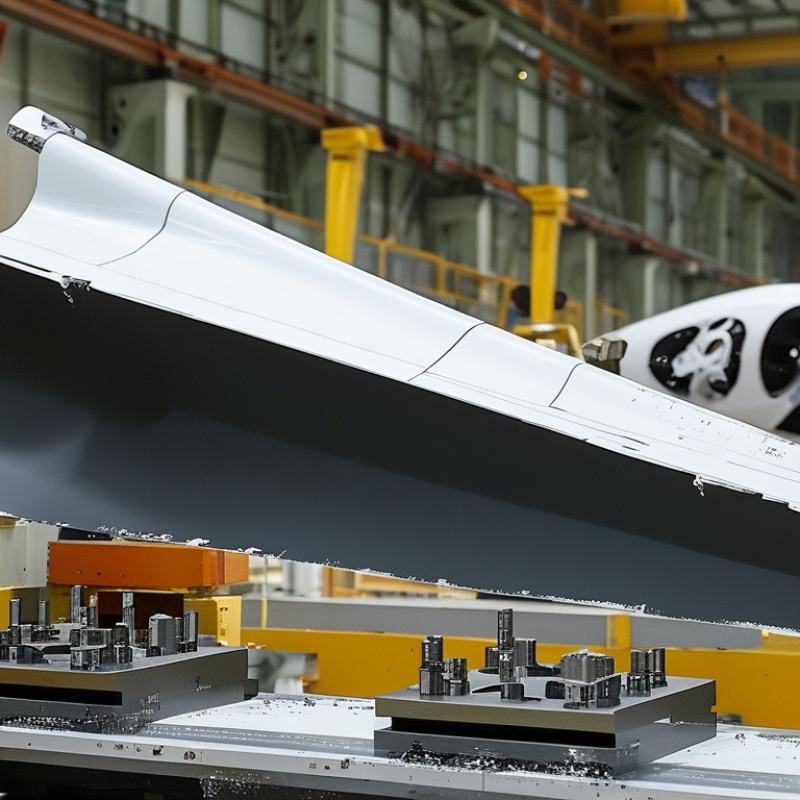
Choosing a multi-axis CNC machine for aerospace parts starts with the part’s geometry, material, and inspection demands. A five-axis machine can reach angled surfaces without repeated setups. This reduces alignment errors and protects critical datums.
I have found that machine travel alone is not enough. Evaluate spindle stiffness, thermal stability, rotary-axis accuracy, and vibration control. Titanium creates heat and cutting pressure, while aluminum often demands high-speed motion. Inconel is slower and less forgiving. The machine must maintain accuracy during long cycles, not only during a showroom test.
Check the work envelope carefully. A large aircraft bracket may need more clearance than its dimensions suggest. Long tools can deflect near deep pockets. That detail is easy to underestimate. Review probing systems, tool measurement, coolant delivery, and chip evacuation before purchase. Reliable aerospace production also needs documented calibration, repeatable fixtures, and inspection data linked to each part. Confirm that the control system supports verified toolpaths and suitable post-processing for simultaneous motion. Poor post-processing can create gouges, sudden axis reversals, or uneven surface marks.
A practical trial cut is valuable. Use representative material, wall thickness, and tolerance requirements. Measure the finished part with appropriate inspection equipment. Then compare cycle time with surface quality and tool life. The fastest cycle is not always the most stable one. I would also question my first machine choice after reviewing maintenance access, operator training, and service response. These factors seem ordinary, yet they can decide whether aerospace production remains consistent.
Aerospace parts often combine deep cavities, angled walls, thin ribs, and compound curves. Machine axes should match these features, not simply increase machine complexity. Three-axis equipment can produce flat brackets and accessible pockets efficiently. However, it may require repeated setups for parts with multiple orientations. Each reset adds alignment risk and handling time.
A four-axis machine suits components needing controlled rotation around one primary direction. It can machine cylindrical housings, indexed holes, and several faces with fewer setups. Five-axis equipment provides simultaneous tool movement around complex surfaces. This helps maintain tool orientation on turbine-like blades, curved frames, and sculpted structural parts. A shorter cutting tool can reduce vibration inside narrow cavities. That matters.
Production volume should guide the decision. A prototype may benefit from flexible five-axis access, even with longer programming time. Repeated production may favor a simpler configuration with reliable fixtures and faster cycle changes. Review spindle reach, table capacity, rotary limits, probing options, and post-processing compatibility before selecting the machine. These details often decide whether theoretical capability becomes stable output.
Experience shows that initial machine estimates can be too optimistic. A model may appear suitable until clamps block an approach angle or a tool holder strikes a wall. Simulate the complete setup, including fixtures and inspection access. Ask for verified accuracy data under realistic loads. Aerospace work demands traceable inspection, controlled processes, and consistent results, not impressive axis counts alone.
How to Choose Multi Axis CNC Machines for Aerospace Parts?
Evaluating Accuracy, Rigidity, Materials, and Work Envelope
Aerospace parts demand controlled accuracy across several moving axes. Check volumetric accuracy, thermal stability, and repeatability rather than relying on positioning data alone. A probing cycle can reveal drift after several hours of cutting. In practice, shop temperature changes often expose weaknesses that factory tests hide. Keep a documented calibration routine. It may feel excessive, but small errors can multiply across complex surfaces.
Rigidity matters when machining titanium or nickel-based alloys. Look for a stiff machine structure, strong spindle bearings, and stable rotary-axis support. Excessive vibration leaves visible marks around pockets and thin walls. Short tool holders help, although they can limit access to deep features. Test the machine with a realistic fixture and cutting load. A light aluminum test may create false confidence. I would not judge rigidity from specifications alone.
Material choice also affects coolant delivery, chip evacuation, and tool life. Aluminum needs fast chip removal, while titanium requires careful heat control and moderate cutting forces. Composite parts may demand dedicated dust management and specialized tooling. Measure the usable work envelope, not just the advertised travel. Include fixture height, tool length, rotary-axis clearance, and door access. A large table can still feel cramped. Leave room for inspection equipment and safe operator movement.
Evaluating accuracy, rigidity, materials, and work envelope through representative aerospace material properties.
The index is normalized to the highest value in each category. Representative material values: 7075-T6 aluminum—density 2.81 g/cm³, elastic modulus 71.7 GPa, ultimate tensile strength 572 MPa; Ti-6Al-4V—4.43 g/cm³, 114 GPa, 950 MPa; Inconel 718—8.19 g/cm³, 200 GPa, 1,240 MPa. Values vary with heat treatment, product form, and testing standard. Reference data: ASM International material property data and typical aerospace alloy datasheets.
Aerospace demand makes machine selection a production decision, not a showroom exercise. The 2024 Commercial Market Outlook forecasts 43,975 new commercial aircraft deliveries through 2043. That volume increases pressure on repeatability, traceability, and cycle time. In my experience, a five-axis machine needs more than smooth motion. Its control system should provide real-time tool-center-point control, collision avoidance, strong look-ahead, and reliable probing. A fast controller is useful, but poor post-processing can still create expensive mistakes.
Tooling deserves equal attention. Use rigid holders, balanced assemblies, and cutting tools matched to aluminum, titanium, or nickel alloys. Tool-life monitoring can reduce sudden failures, especially during deep pocketing. However, tool databases often look more accurate than shop-floor reality. Vibration, coolant pressure, and fixture stiffness still change results. Plan a physical cutting trial before approving a machine for flight-critical parts. Measure surface finish, positional accuracy, thermal drift, and repeatability across several shifts.
Automation should fit the part family. Pallet systems and robotic loading can support long unmanned runs, while probing verifies stock and fixture position. The International Federation of Robotics reported 541,302 industrial robot installations in 2023. That figure shows automation is expanding, but it does not prove every aerospace cell needs a robot. Software must connect CAD, CAM, simulation, post-processing, inspection, and production records. Digital twins can expose axis-limit and collision risks before machining. Still, simulation is not reality. Skilled operators must review the code, tooling, and first-off inspection.
When choosing multi-axis CNC machines for aerospace parts, purchase price is only one cost. Evaluate spindle life, rotary-axis accuracy, tooling, energy use, inspection time, and planned downtime. A cheaper machine may require expensive fixtures or repeated probing. I once underestimated training costs, and the first-year budget suffered. That mistake still influences my machine comparisons.
Compliance must be built into the selection process. The machine should support documented calibration, process traceability, secure program control, and consistent inspection records. Ask whether its software can preserve revision history and export usable production data. Check the supplier’s quality procedures and technical documentation before signing a contract. A polished demonstration is not proof of aerospace readiness. Request sample records. Review them with quality engineers.
Long-term support often determines whether a machine remains productive after installation. Confirm spare-parts availability, service response times, remote diagnosis options, and technician training. Ask how software updates affect validated processes. A strong supplier should explain maintenance intervals in practical terms, not vague promises. I also prefer a written support plan with named responsibilities and escalation steps. No machine is perfect. A minor control issue can become a major delivery problem when support is slow. Before approval, compare five-year ownership costs and speak with current users about repairs, communication, and unresolved problems. Their criticism may reveal more than a sales presentation.
: Choose axes according to geometry and production needs. Three axes suit flat brackets and accessible pockets. Five axes help with compound curves and deep cavities.
It suits cylindrical housings, indexed holes, and several faces needing controlled rotation. Fewer setups can reduce handling time and alignment risk.
It maintains tool orientation across curved surfaces. Shorter tools can reduce vibration inside narrow cavities. That matters.
Yes. Prototypes may benefit from flexible five-axis access. Repeated production may favor simpler equipment, stable fixtures, and faster cycle changes.
Review volumetric accuracy, thermal stability, repeatability, and probing performance. Temperature changes can expose drift after several hours. Factory data may appear too optimistic.
Titanium and nickel-based alloys create demanding cutting loads. A stiff structure and stable rotary support can reduce vibration marks around thin walls.
Measure usable space, not advertised travel alone. Include fixture height, tool length, rotary clearance, door access, and inspection equipment.
Aluminum needs rapid chip removal. Titanium needs careful heat control and moderate cutting forces. Composite parts may require dust management and specialized tools.
Simulate the complete setup, including clamps, tool holders, approach angles, and inspection access. A holder may strike a wall unexpectedly.
Use a realistic fixture and cutting load. A light aluminum test can hide weaknesses. I would not judge rigidity from specifications alone.
Choosing a multi-axis CNC machine for aerospace parts requires a careful balance between geometry, precision, productivity, and long-term value. Why are multi-axis CNC machines important in aerospace parts? They can produce complex contours, deep cavities, angled features, and integrated components with fewer setups, helping improve dimensional consistency and reduce production time. The ideal machine should match the number of axes to the part’s complexity and production volume while offering sufficient work envelope, rigidity, thermal stability, and accuracy.
Material compatibility is also essential because aerospace components may require machining demanding alloys and composites. Buyers should evaluate spindle performance, cutting-tool options, probing systems, control capabilities, simulation software, and automation features. In addition, reliable inspection processes and support for documentation can help maintain quality and compliance with applicable aerospace requirements. Finally, the decision should consider total ownership cost, including installation, training, maintenance, energy use, tooling, software updates, and technical support. A well-selected machine should support current projects while remaining adaptable to future designs and production demands.

Gemnexa CNC