Why is stainless steel CNC machining challenging? The answer begins with the material, not the machine. Stainless steel combines high strength, low thermal conductivity, and strong work-hardening behavior. During cutting, heat remains near the tool edge instead of leaving through the chip. A slight dwell can create a hardened layer, much like a thin glassy skin on the workpiece. The next pass then meets harder material.
The production scale makes this issue especially important in China. World Stainless reported approximately 58.4 million tonnes of crude stainless steel production worldwide in 2023. China contributed about 36.7 million tonnes, representing the largest national share. This scale supports extensive machining capacity, but it also creates varied results between factories. Equipment age, operator experience, coolant control, and inspection discipline can differ greatly. A large industrial base does not guarantee identical process capability.
Technical guidance from Sandvik Coromant identifies work hardening, heat concentration, vibration, and built-up edge as major stainless steel cutting concerns. These problems can damage inserts, distort thin walls, and leave visible tool marks around holes or pockets. In practical production, an unsuitable feed rate may turn a clean slot into a blue, overheated groove. That detail matters for medical, food-processing, and precision automation components.
The challenge is not simply “China” or “stainless steel.” It is process control. Reliable suppliers verify material grades, use suitable carbide geometries, manage chip evacuation, and measure parts throughout production. Still, one assumption deserves reconsideration: faster cutting is rarely better cutting. World Stainless statistics describe market volume, not machining quality. Engineers must connect both realities through documented trials, stable parameters, and honest inspection records.
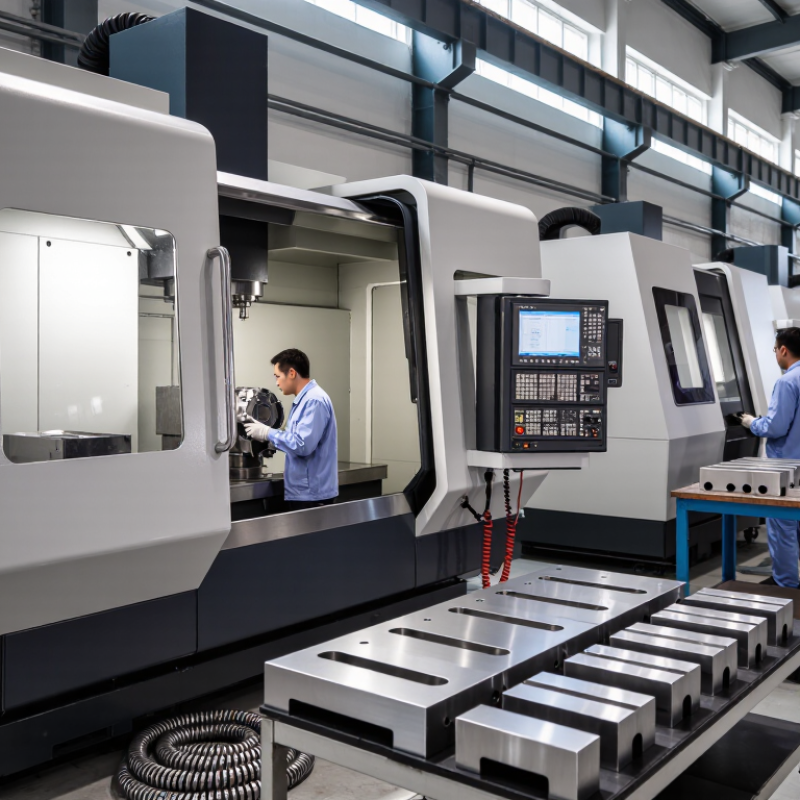
Stainless steel is not simply “hard steel.” Its low thermal conductivity traps heat near the tool-workpiece interface. Austenitic grades also work-harden after rubbing. A dull insert can create a harder surface within seconds. The International Stainless Steel Forum reported 58.4 million tonnes of global stainless steel production in 2023. China contributed roughly 62 percent. This scale creates a complex sourcing environment, with many grades, mills, batches, and delivery schedules. The same nominal grade may still cut differently.
The challenge in China is not metallurgy alone. It also involves varied workshop conditions, compressed lead times, and frequent material changes. One factory may switch from 304 to 316L, then from thin tubing to a forged block. Residual stress, inclusions, and inconsistent heat treatment can cause unexpected distortion. The World Steel Association recorded China’s 2023 crude steel output at 1,019.1 million tonnes, or about 53.9 percent of global production. That huge industrial network offers capacity, but capacity does not guarantee identical process control. A perfect cutting recipe rarely exists.
On the shop floor, 316L conducts roughly 16 W/m·K at room temperature, according to ASM Handbook data. Carbon steel commonly conducts more than twice that amount. Heat therefore stays near the cutting edge. Rigid workholding, sharp coated tools, stable coolant delivery, and toolpaths without dwell are essential. Cutting parameters must match the actual batch, not only the drawing. I have seen teams trust a catalog speed too much. It looked efficient, but the edge failed early and the surface hardened. Trial cuts, recorded tool life, and honest review remain necessary.
| Data Dimension | Typical Stainless-Steel Data | Why It Makes CNC Machining Difficult | Practical Control Measure |
|---|---|---|---|
| Work-hardening tendency | Austenitic grades such as 304 and 316L harden rapidly when the cutting tool rubs instead of cutting. | A hardened surface layer increases cutting forces, accelerates flank wear, and can cause repeated tool failure. | Use a consistent feed, avoid dwell marks, maintain positive tool engagement, and select sharp carbide tooling. |
| Thermal conductivity | 304 stainless steel has thermal conductivity of approximately 16 W/m·K at room temperature, much lower than common carbon steels. | Heat remains concentrated near the cutting edge instead of being carried away through the workpiece and chips. | Use adequate coolant flow, chip evacuation, suitable cutting speeds, and heat-resistant tool grades. |
| Ductility and toughness | 304 and 316L commonly have elongation values around 40% or higher, depending on product form and condition. | The material tends to form long, continuous chips that may wrap around the tool, spindle, or workpiece. | Use chipbreaker geometries, controlled feed rates, high-pressure coolant where available, and safe chip-clearance procedures. |
| Typical hardness range | Annealed 304 and 316L are commonly below approximately 200 HB; 17-4 PH can exceed 300 HB after precipitation hardening. | Different heat-treatment conditions require different cutting tools, feeds, speeds, and stock-removal strategies. | Confirm the material certificate and heat-treatment condition before programming the machining process. |
| Common stainless grades | 304: general corrosion resistance; 316L: improved chloride resistance; 17-4 PH: high strength after aging; 410: martensitic and heat-treatable. | A cutting strategy suitable for one grade may produce poor tool life, burrs, or dimensional errors on another. | Specify the exact grade, condition, standard, and mechanical requirements on the drawing and purchase order. |
| Cutting speed | For carbide milling of annealed austenitic stainless steel, initial surface-speed ranges are often approximately 60–150 m/min, depending on tool diameter, coating, and operation. | Excessive speed raises edge temperature and wear; insufficient speed can increase rubbing and work hardening. | Use cutting-tool supplier data as the starting point and validate parameters with a controlled first-article run. |
| Tool wear | Austenitic stainless steel can cause flank wear, built-up edge, notch wear, and chipping at interrupted cuts. | Tool wear changes cutting forces and dimensions during production, especially on long runs. | Monitor tool life by cutting time or part count and establish offset-adjustment limits before mass production. |
| Surface roughness | A typical CNC-milled stainless-steel surface may achieve approximately Ra 1.6–3.2 µm with suitable tooling and stable parameters; finer finishes require dedicated finishing operations. | Built-up edge, vibration, tool wear, and long chips can leave scratches, tearing, or uneven tool marks. | Define Ra requirements clearly, separate roughing and finishing, and use a light finishing pass with a sharp tool. |
| Dimensional stability | Thermal expansion for common austenitic stainless steel is approximately 16–17 × 10−6/K. | Temperature changes between machining, inspection, and shipment can affect tight dimensions. | Control the inspection environment, allow parts to stabilize thermally, and record measurement temperature for precision work. |
| Burr formation | Ductile stainless steel commonly produces rollover burrs at exits, cross-holes, and interrupted edges. | Burrs can interfere with assembly, sealing, cleanliness, and final dimensional inspection. | Add edge-break specifications, use suitable entry and exit strategies, and define manual or automated deburring requirements. |
| Coolant and cleanliness | Water-soluble coolant concentration is commonly maintained within the supplier’s specified range, often around 6–10% for general machining applications. | Poor concentration control can cause corrosion staining, odor, bacterial growth, poor lubrication, or unstable tool life. | Check concentration with a refractometer, maintain filtration, and use a coolant compatible with stainless-steel processing. |
| Material traceability in China-based production | Material may be supplied to standards such as ASTM, EN, GB/T, or JIS, with different designation systems and certificate formats. | Similar grade names can conceal differences in chemistry, heat treatment, thickness, or mechanical properties. | Require heat numbers, mill certificates, chemical composition, mechanical properties, and positive material identification when necessary. |
| Production consistency | Machining results depend on raw-material condition, machine rigidity, tooling, coolant management, and operator process control. | Variation between batches or shifts can affect tool life, surface finish, burr size, and dimensional capability. | Use a documented setup sheet, first-article inspection, in-process checks, statistical monitoring, and controlled tool replacement. |
| Recommended quality checks | Typical checks include dimensional inspection, surface roughness, burr inspection, material certification, hardness, and visual examination. | A part can meet basic dimensions while still failing requirements for finish, cleanliness, material grade, or corrosion performance. | Create an inspection plan linked to drawing tolerances, material standards, surface requirements, and customer acceptance criteria. |
Note: Cutting parameters and material properties are typical engineering ranges. Final values should be verified against the specific stainless-steel grade, heat-treatment condition, machine, tooling, coolant, and operation.
Stainless steel conducts heat poorly, so heat remains near the cutting edge. Heat stays trapped. Some grades also harden after rubbing, making later passes more difficult.
Different material batches may contain varying residual stress, inclusions, or heat-treatment results. A nominal 304 grade is not always identical in practice.
A dull insert increases friction and heat. It can harden the surface within seconds. The next pass may then require more force.
Thin walls may distort during clamping or repeated cutting. Burrs can remain stubborn around holes and pockets. Fixture pressure must be controlled carefully.
Review the material certificate and record the heat number. Portable alloy testing can confirm the grade. Traceability may still be incomplete, so verify important batches independently.
Monitor tool life, coolant concentration, spindle load, and fixture repeatability. Use sharp coated tools and stable coolant flow. Avoid toolpath dwell.
Use calibrated micrometers, height gauges, and coordinate measuring equipment. Inspect critical dimensions more frequently. Clean parts carefully because embedded iron may harm corrosion resistance.
Not necessarily. A low price may hide weaker inspection, unclear revision control, or outsourced finishing. Ask for process sheets, calibration dates, and measured reports.
Rarely. Cutting parameters should match the actual material, wall thickness, and setup. Trial cuts and recorded tool life provide better evidence than catalog values.
Revalidate the process before full production. Retain inspection records and compare tool wear. A signed checklist helps, but it does not prove stable machining.
Why is stainless steel CNC machining challenging? In China, the process requires careful control because stainless steel is strong, tough, and prone to work hardening, heat buildup, and chip management problems. These material properties can accelerate tool wear, create dimensional deviations, and affect surface quality when cutting conditions are not properly selected. Common challenges include maintaining tight tolerances, preventing vibration, controlling burrs, and achieving stable results across different production batches.
To reduce these risks, Chinese manufacturers typically combine material inspection, process planning, suitable tooling, optimized cutting parameters, and effective coolant management. Quality control is strengthened through first-article inspection, in-process measurement, equipment maintenance, and final testing. Better results can also be achieved by selecting the right stainless steel grade, improving tool paths, using rigid machine setups, and monitoring production data. With an integrated approach to engineering, machining, and inspection, stainless steel components can be produced more consistently, efficiently, and reliably.

 Gemnexa CNC