Warping in plastic moulded components is a significant challenge in manufacturing. It can lead to defects, impacting product quality and performance. Understanding "how to avoid warping in plastic moulded components?" is essential for engineers and manufacturers seeking reliability.
Many factors contribute to warping, including temperature variations, material properties, and cooling rates. Each element plays a crucial role in the final shape of the product. For instance, differences in wall thickness can create uneven cooling, resulting in distortion. Properly managing these aspects is vital. Yet, there is no one-size-fits-all solution, and sometimes even small adjustments can lead to significant improvements.
As experts in the field, we recognize that warping issues can sometimes arise unexpectedly. It challenges manufacturers to constantly adapt and optimize their processes. By implementing effective strategies, such as maintaining uniform cooling and selecting the right materials, companies can enhance their moulding outcomes. However, there’s always room for learning. Each failed attempt can teach valuable lessons, pushing the boundaries of innovation in plastic moulding.
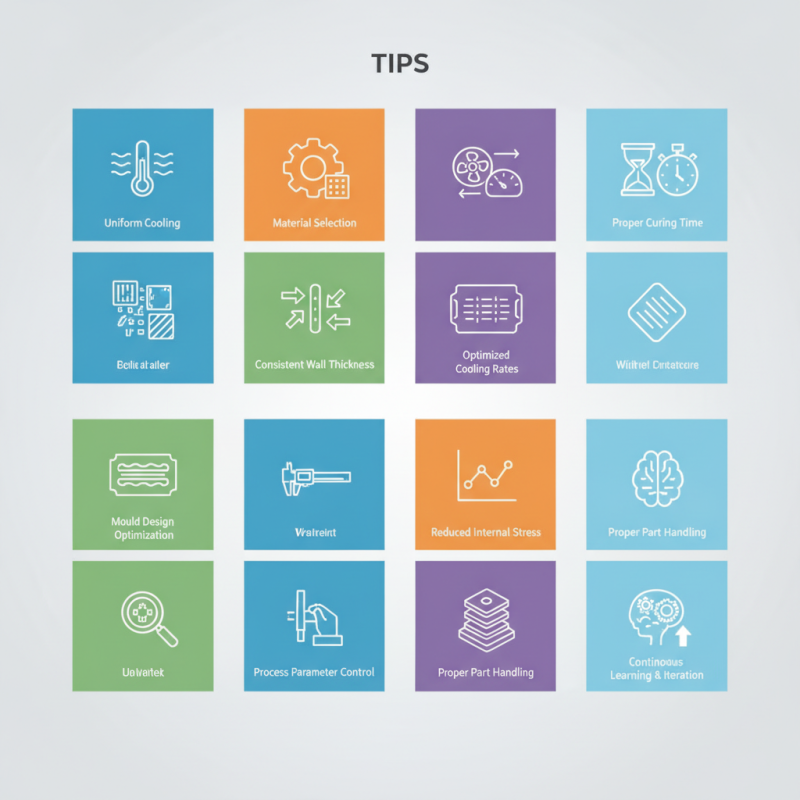
Understanding the Causes of Warping in Plastic Moulded Components
Warping in plastic moulded components is a common issue faced by manufacturers. It occurs when uneven cooling or internal stresses cause a part to bend or twist. According to a study by the Society of Plastics Engineers, 70% of all defects in plastic parts are attributed to warping. This highlights the importance of understanding its causes.
One major factor influencing warping is temperature inconsistencies during the cooling process. If one area cools faster than another, it can lead to uneven shrinkage. This phenomenon can cause dimensional distortion. Additionally, variations in moisture content can affect how plastics behave during moulding. If moisture is absorbed into the material, it can lead to swelling and, ultimately, warping. Moisture levels can vary significantly by environment, warranting careful monitoring.
The material selection also plays a pivotal role. Some plastics are more prone to warping due to their inherent properties. For instance, higher crystalinity in certain polymers leads to increased shrinkage rates. As a result, the selection of materials should align with part design and expected use conditions. It’s essential to reflect on these factors, as overlooking them risks increased scrap rates and production delays.
Top 10 Tips to Prevent Warping in Plastic Moulded Components
Optimal Material Selection to Minimize Warping Risk
When it comes to minimizing warping in plastic moulded components, optimal material selection plays a critical role. Choosing a material with low shrinkage rates can significantly reduce the chances of deformation. For instance, polycarbonate and nylon are often preferred for their stability and resilience under thermal stress. Studies have established that materials with a shrinkage rate below 0.5% can mitigate warping effectively, enhancing product integrity and performance.
It's essential to consider thermal cycling during the selection process. Materials like ABS demonstrate different expansion and contraction rates compared to polypropylene. Reports suggest that mismatched coefficients of thermal expansion can lead to structural failures. The American Society for Testing and Materials (ASTM) emphasizes thorough testing under varied conditions to identify the best materials for specific applications. While selecting a suitable plastic is crucial, it’s also important to reassess your choices periodically. A previously chosen material might not hold up under new environmental stresses or production techniques.
An added layer of complexity arises when recycled plastics are involved. They often display inconsistent properties, leading to unpredictable warping. The recycling process can introduce contaminants, affecting the material's performance. Hence, recycling should always be approached cautiously. Each choice has its trade-offs, and companies must frequently reflect on their material selections to ensure optimal outcomes in performance and reliability.
Top 10 Tips to Prevent Warping in Plastic Moulded Components
| Tip No. |
Tip Description |
Material Type |
Warping Risk Level |
Recommended Action |
| 1 |
Choose low shrinkage materials |
Polypropylene |
Low |
Use materials specifically formulated for low shrinkage. |
| 2 |
Optimize part design |
N/A |
Medium |
Design parts with uniform thickness. |
| 3 |
Control cooling rates |
N/A |
High |
Ensure consistent cooling across all areas of the mold. |
| 4 |
Incorporate ribs and gussets |
N/A |
Medium |
Use structural supports to distribute stress and prevent warping. |
| 5 |
Adjust mold temperature |
N/A |
Low |
Maintain optimal mold temperature to reduce thermal stress. |
| 6 |
Select appropriate injection speed |
N/A |
Medium |
Adjust injection speed to allow for even filling of the mold. |
| 7 |
Use additives to improve strength |
Nylon |
Medium |
Integrate additives or reinforcements to enhance material properties. |
| 8 |
Perform regular mold maintenance |
N/A |
Low |
Keep molds in optimal condition to ensure consistent results. |
| 9 |
Use simulation software |
N/A |
Medium |
Simulate the molding process to identify potential warping issues. |
| 10 |
Conduct thorough testing |
Various |
High |
Test prototypes under different conditions to evaluate performance. |
Best Practices for Mould Design to Prevent Deformation
Mould design plays a crucial role in preventing warping in plastic components. Proper venting is essential to allow gases to escape during the injection process. If gas gets trapped, it can create uneven pressures, leading to warpage. Designers should include adequate venting channels to facilitate this.
Wall thickness is another vital factor. If the walls are uneven, cooling will not be uniform. Thicker areas retain heat longer, while thinner areas cool quickly. This disparity can cause distortion. Checking wall thickness consistency can mitigate this issue.
Choosing the right material is also important. Some plastics are more prone to shrinkage and warping than others. Understanding the characteristics of the chosen material can guide better design choices. Trial and error in material selection may sometimes reveal unexpected deformation patterns, making it crucial to learn from each attempt. Adjustments and tests help refine mould design further.
Controlling Cooling Rates During the Moulding Process
Controlling cooling rates during the moulding process is critical to prevent warping in plastic moulded components. Uneven cooling can lead to internal stresses, which ultimately result in deformities. Maintaining a consistent cooling rate helps minimize these stresses and supports dimensional accuracy.
One key tip is to use cooling channels strategically. Positioning them near areas that require extra cooling can enhance even heat distribution. Another approach is to monitor the mould temperature closely. A consistent temperature helps in maintaining uniform cooling. Sometimes, introducing a gradual cooling phase can also make a difference.
Paying attention to the material being moulded is essential. Different plastics have unique cooling characteristics. Adjusting cooling times based on the specific material can help improve quality. Additionally, scrutinizing the mould design for any potential hotspots is crucial. This attention to detail can prevent unexpected warping and ensure product integrity.
Regular Quality Checks and Maintenance for Moulded Components
Regular quality checks are essential in maintaining the integrity of moulded components. These checks help identify warping early, preventing more extensive damage. Inspect each component visually and mechanically for defects. Use tools like calipers to ensure dimensions align with specifications. Small deviations can lead to bigger issues down the road.
Maintenance routines should not be overlooked. Ensure that moulds are cleaned and inspected regularly. Even minor wear can affect the quality of the end product. Documenting these maintenance activities builds a reliable history. Regularly updated logs can help in recognizing patterns of wear. They are vital for scheduling timely replacements or repairs.
Consider the manufacturing environment as well. Temperature and humidity can significantly impact moulded components. Keep the working area stable and consistent. Unexpected changes can lead to variations in the moulded parts. Address these issues proactively and do not let them accumulate. It’s a constant process of evaluation and adaptation.
Conclusion
Warping in plastic moulded components is a common issue that can adversely affect product quality and functionality. To answer the question of "How to avoid warping in plastic moulded components?", it is crucial to first understand the underlying causes of warping, which often include uneven cooling and material inconsistencies. Selecting the right materials that are less prone to deformation can significantly reduce warping risks.
In addition to optimal material selection, implementing best practices in mould design is essential. This includes ensuring uniform wall thickness and proper venting. Controlling cooling rates during the moulding process plays a vital role in preventing uneven contractions that lead to warping. Finally, conducting regular quality checks and maintenance of moulded components can help identify issues early and ensure consistent production quality. By following these guidelines, manufacturers can effectively minimize the occurrence of warping in their plastic moulded products.

 Gemnexa CNC