In the modern manufacturing landscape, the choice between precision CNC machining and manual machining is significant. Many industries focus on achieving high-quality results within tight timelines. This brings us to the question: what are the advantages of precision CNC machining over manual machining?
Precision CNC machining offers unparalleled accuracy and repeatability. Unlike manual methods, CNC machines operate based on programmed instructions. This minimizes human error and ensures consistency in production. Automation in CNC machining allows for complex designs that are difficult to achieve manually. For example, intricate parts for aerospace or medical devices often require the precision that only CNC can deliver.
However, manual machining still holds value, especially in unique or low-volume projects. Skilled machinists can make quick adjustments and tackle unforeseen issues creatively. Their expertise can add a human touch that machines cannot replicate. Nevertheless, as industries evolve, the trend leans towards the efficiency and precision of CNC machining, marking a shift in manufacturing methods.
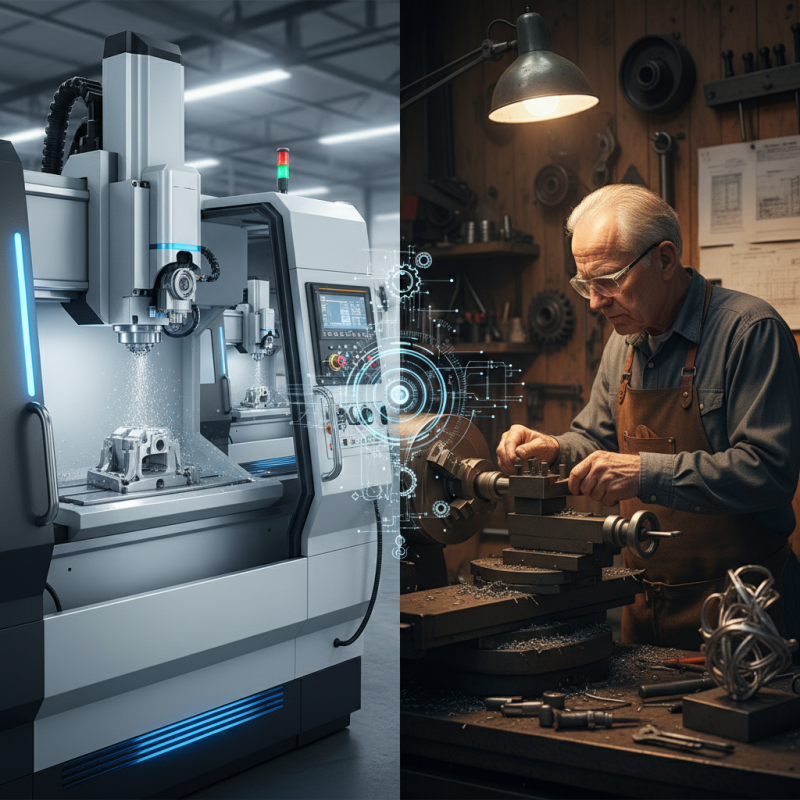
Advantages of Precision CNC Machining Over Manual Machining
Precision CNC machining offers numerous advantages over manual machining. One major benefit is its high accuracy. CNC machines can create parts with tolerances as tight as 0.001 inches. This ensures that each part is consistent and meets detailed specifications. In contrast, manual machining often results in variations due to human error. This discrepancy can lead to costly rework and waste.
Another key advantage of precision CNC machining is efficiency. Once programmed, CNC machines can operate continuously without breaks. They can produce complex parts in a fraction of the time it takes manual methods. While manual machining relies heavily on the skill of the operator, CNC machining automates processes. This allows for quicker turnaround times and increased productivity.
Tips: When considering CNC machining, evaluate your production needs. Understand the complexity of the parts you require. It's essential to assess whether you need precision on a large scale. If your project has tight deadlines, CNC could be the best choice. Always seek out experienced professionals for programming and setup. Their expertise can significantly enhance the machining process.
Enhanced Accuracy and Consistency in CNC Machining
Precision CNC machining has transformed manufacturing by offering enhanced accuracy and consistency compared to manual machining. According to industry data, CNC machines can achieve tolerances of ±0.005 mm, while manual processes often struggle to maintain such precision. This difference is vital in industries like aerospace and medical devices, where even slight deviations can result in serious consequences.
The reliability of CNC machining lies in its automation. A CNC machine can operate continuously for hours without fatigue, minimizing human error. Reports indicate that 30% of defects in manual machining result from operator variability. This inconsistency is largely absent in CNC operations, where each piece is produced with the same high standards. However, it is essential to remember that the programming of CNC machines requires skilled operators. A poorly programmed machine can lead to miscalculations and flawed products, highlighting the importance of expertise in CNC processes.
Additionally, the efficiency gained through CNC machining often leads to faster production cycles. A 2019 analysis showed that CNC machining could reduce production time by 50%, effectively increasing output while maintaining quality. Still, transition costs and training for operators can pose challenges that companies need to address. The quest for perfection in precision machining continues, as technological advancements evolve and redefine industry standards.
Greater Production Efficiency and Speed in CNC Processes
In today’s competitive landscape, precision CNC machining outshines manual machining, particularly in production efficiency and speed. CNC processes can operate continuously, reducing downtime significantly. It allows for rapid setup changes and the ability to produce complex parts quickly. This flexibility leads to higher output and shorter lead times.
CNC machines maintain tight tolerances, enhancing product quality. Every part produced meets specifications closely. This consistency is hard to achieve with manual machining, where human error can introduce variability. Over time, these small errors can accumulate, leading to increased waste and costs.
**Tip:** Regularly maintain CNC equipment to maximize efficiency. A well-maintained machine reduces the risk of breakdowns, ensuring better speed and productivity.
Another key advantage of CNC machining is automation. It minimizes the need for manual intervention, which can slow processes down. Operators can focus on overseeing production rather than on the minutiae of each task. However, training is essential. Staff must understand both the operation and programming of CNC machines.
**Tip:** Provide ongoing training to ensure team members adapt as technology evolves. This investment pays off through improved production efficiency. By embracing automation, companies can position themselves for success in a fast-changing market.
Versatility of CNC Machining for Complex Designs
CNC machining offers unparalleled versatility, especially for complex designs.
It can create intricate shapes that manual machining cannot match. For example, delicate components can be manufactured with fine details.
These details are essential in industries like aerospace and medical technology,
where precision is crucial.
Adopting CNC machining can lead to challenges. While setups are faster, programming requires skilled technicians.
Mistakes in coding can result in waste or defective parts. Companies must invest in training to overcome this learning curve effectively.
Moreover, while CNC machines offer consistency, adjustments can be tricky and time-consuming.
The fine balance between machine efficiency and manual oversight is often a point of reflection for manufacturers.
Yet, the ability to replicate complex designs sets CNC machining apart. Unique geometries can be realized with minimal variation from piece to piece.
This capability reduces the risk of human error commonly seen in manual machining.
CNC is not just about speed; it’s about expanding what is possible in manufacturing.
Understanding these nuances allows companies to innovate continually and meet evolving design requirements.
Cost-Effectiveness of CNC Machining in the Long Term
Precision CNC machining offers significant cost-effectiveness over manual machining in the long term. With CNC, production is often automated, leading to reduced labor costs. This method enhances efficiency by minimizing human error, resulting in consistent quality. High precision lowers the likelihood of defects, which can save money on rework and material waste.
In contrast, manual machining can introduce inconsistencies. Skilled labor is required, and this can increase overhead costs. Machines often require maintenance and downtime, which adds to expenses. CNC machines, while initially more expensive, often yield faster turnaround times. The long-term benefits outweigh the initial investment, making CNC a smarter choice for many businesses.
However, it's essential to assess each project's requirements. Not every part may be ideal for CNC machining. Some intricacies might limit the effectiveness of automated processes. It's worth reflecting on whether your projects can leverage CNC advantages efficiently. Understanding the nuances can lead to a more informed decision.
FAQS
: The main advantage is high accuracy, achieving tolerances as tight as 0.001 inches.
CNC machining operates continuously and can produce complex parts much faster than manual methods.
Consistency minimizes defects caused by human error, ensuring each part meets high standards.
Industries like aerospace and medical devices rely on CNC for precise components to avoid serious issues.
Poor programming can lead to miscalculations, emphasizing the need for skilled operators.
Regular maintenance and ongoing training for operators can enhance machine performance and production speed.
Training gaps can lead to mistakes, impacting both production quality and efficiency.
Yes, CNC machines can produce complex shapes quickly, significantly reducing production time.
Some may think CNC reduces the need for skilled workers, but expertise in programming remains crucial.
Ongoing advancements continuously redefine standards, driving improvements in quality and production capacity.
Conclusion
The article "China Top 10 Benefits of Precision CNC Machining vs Manual Machining" explores the various advantages of precision CNC machining over traditional manual machining methods. One of the key benefits is enhanced accuracy and consistency, as CNC machines operate with high precision, minimizing human error and ensuring uniformity in production. Furthermore, CNC machining offers greater production efficiency and speed, allowing for quicker turnaround times on complex projects.
Another significant advantage lies in the versatility of CNC machining, which can easily adapt to create intricate designs that may be challenging or impossible to achieve with manual methods. In the long run, CNC machining is also more cost-effective, as it reduces labor costs and material waste while boosting productivity. Overall, the article addresses the important question, "What are the advantages of precision CNC machining over manual machining?" by highlighting these critical benefits that make CNC machining an optimal choice for modern manufacturing needs.

 Gemnexa CNC