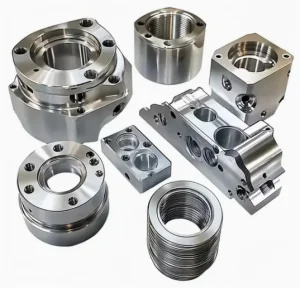
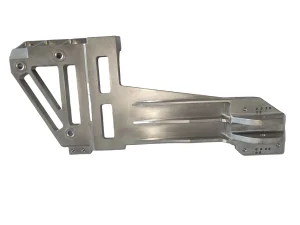
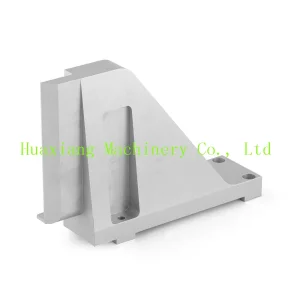
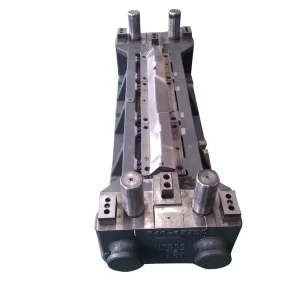
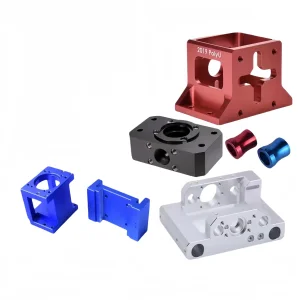
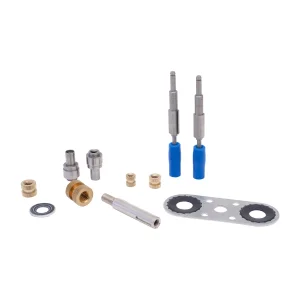
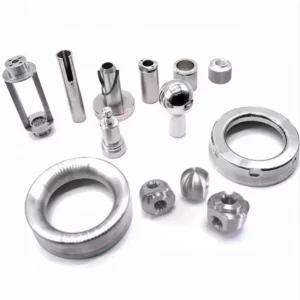
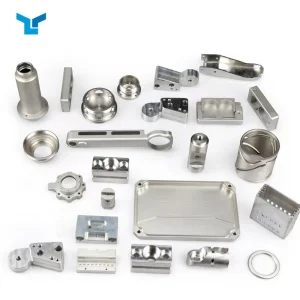
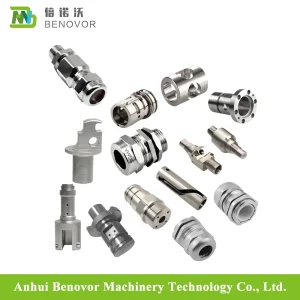
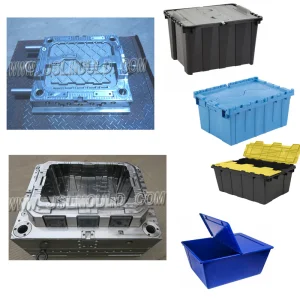
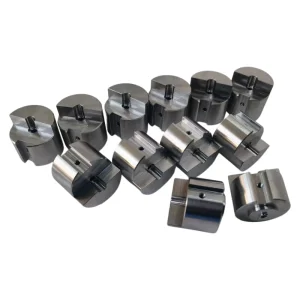
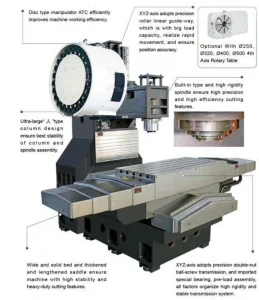
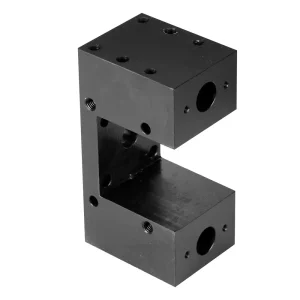
Ningbo Gemnexa CNC Co., Ltd. is a professional manufacturer and precision machining enterprise specializing in CNC machining and mould tooling, dedicated to providing high‑quality custom components and precision solutions for global industries. With a complete and scientific quality management system in place, Gemnexa CNC is recognized for its commitment to integrity, product quality, and continuous innovation in the precision machining field. The company integrates advanced CNC milling, turning, drilling, and multi‑axis machining capabilities with experienced technical teams to deliver components that meet stringent customer specifications across automotive, aerospace, electronics, medical, and industrial sectors.
Situated in the thriving manufacturing region of Ningbo, Zhejiang Province, the company operates modern facilities equipped with cutting‑edge machining centers and testing instruments to ensure consistent product excellence. Gemnexa CNC’s core services include precision CNC machining for metals and plastics, rapid prototyping, complex geometry parts, and mold fabrication. The company’s highly skilled engineers and technicians work closely with clients from design review through production to final inspection, ensuring efficient delivery and long‑term reliability.
Committed to superior craftsmanship and customer‑centric service, Ningbo Gemnexa CNC Co., Ltd. pursues excellence in every project, whether for prototype runs or large‑scale production orders. By combining advanced technology, rigorous quality control, and responsive support, Gemnexa CNC continues to build strong partnerships worldwide and serve as a trusted partner for precision manufacturing solutions.
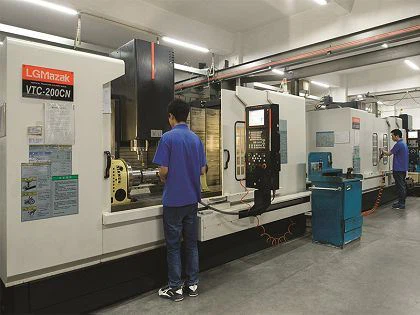
Corrosion remains one of the single greatest structural hazards to modern heavy industry, offshore operations, and highly controlled laboratory environments. Annually, material degradation generates direct and indirect costs amounting to billions of dollars globally. To combat this, procurement teams look to premium, CE-certified corrosion-resistant CNC components as essential structural building blocks.
Marine environments, deep-sea exploration, and high-saline offshore drilling rigs subject components to continuous galvanic and pitting attacks. Standard alloy components degrade in weeks; whereas our precision engineered Duplex steel and nickel-alloy CNC parts maintain mechanical integrity over decades.
Petrochemical processing facilities, pharmaceutical synthesizers, and semiconductor cleanrooms require components that resist concentrated acids (such as sulfuric or hydrochloric acid) and abrasive cleaning chemicals without surface leaching or structural degradation.
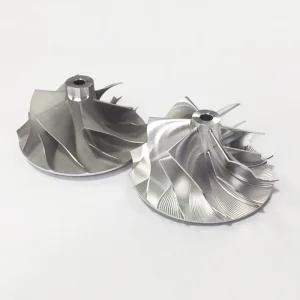
Components in automotive exhaust turbochargers or aerospace gas turbines undergo simultaneous cyclic stress, friction, and oxidizing environments at elevated temperatures. Utilizing Super Alloys prevents creep, thermal oxidation, and stress corrosion cracking (SCC).
Corrosion-resistant custom parts find critical roles across specialized regional sectors. Below are primary scenarios where custom-machined alloys are deployed to protect high-investment system architectures.
In regions with extensive marine infrastructure (e.g., North Sea offshore wind farms, Rotterdam harbor facilities), CNC-machined titanium, super duplex stainless steels, and copper-nickel alloys are used in submarine connectors, sensor housings, and hydraulic manifolds. These elements withstand constant immersion in saltwater under high-pressure dynamics.
Surgical instruments, orthopedic implants, and endoscope housings require materials that resist bodily fluids and frequent autoclave sterilization. Highly polished Austenitic Stainless Steel (316LVM) and Grade 5 Titanium alloys are machined to sub-micron tolerances, ensuring bio-compatibility and absolute zero-corrosion integrity.
Semiconductor manufacturing depends on ultra-high purity gas and chemical delivery networks. Specialized PTFE, PVDF, and electro-polished Hastelloy CNC-machined valves, nozzles, and regulators prevent particulate shedding and surface pitting from corrosive process gases like hydrogen chloride or fluorine.
Matching the correct metallic alloy or specialty polymer to specific environmental threats is key to minimizing lifecycle costs. Our engineering team selects, tests, and validates raw stock to optimize Pitting Resistance Equivalent Numbers (PREN).
| Material Class | Specific Alloy Example | PREN Value | Primary Corrosion Advantage | Typical Industrial Applications |
|---|---|---|---|---|
| Austenitic Stainless Steel | AISI 316L / 1.4404 | 23 - 25 | Resistance to organic acids and moderate chloride solutions. | Food processing, pharmaceutical equipment, marine hardware. |
| Duplex Stainless Steel | Duplex 2205 / 1.4462 | 31 - 38 | High resistance to chloride stress corrosion cracking & erosion. | Chemical processing vessels, marine heat exchangers. |
| Super Alloys (Nickel Base) | Hastelloy C276 / Inconel 625 | > 45 | Exceptional resistance to reducing acids, wet chlorine, and pitting. | FGD systems, aerospace combustion, acid gas wells. |
| Titanium Alloys | Ti-6Al-4V (Grade 5) | N/A | Virtually impervious to seawater, nitric acid, and chlorine gas. | Aerospace structures, medical implants, deep-sea sensors. |
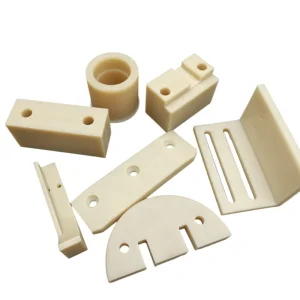
| High Performance Plastics | PTFE / PEEK | N/A | Universal chemical inertness, zero galvanic conduction. | Semiconductor fittings, lab equipment, low-friction seals. |
Material selection is only the initial stage of corrosion prevention. Gemnexa CNC utilizes state-of-the-art post-machining surface modification processes to double the operational lifespans of parts:
Treating stainless steels with nitric or citric acid baths to strip free iron from the surface, enhancing the natural protective chromium oxide layer.
Electrochemical transformation of aluminum surfaces into heavy-duty aluminum oxide layers, boosting wear and corrosion resistance in marine environments.
Auto-catalytic chemical deposit of a nickel-phosphorus alloy on complex geometries, ensuring uniform corrosion protection even in inner cross-holes.
Why sourcing from Ningbo, China provides global companies with distinct structural advantages in terms of cost-effectiveness, raw material access, and delivery speeds.
Ningbo hosts one of the most comprehensive metallurgical and mechanical machining clusters in the world. This dense proximity to specialized raw material suppliers, secondary heat treatment facilities, and surface treatment plants minimizes logistics times and lowers raw-material overheads.
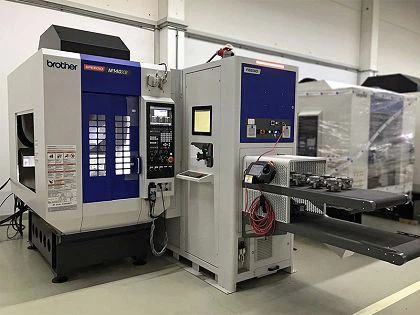
Chinese machining hubs have rapidly transitioned from high-volume manual labor to highly automated multi-axis smart factories. Utilizing advanced 5-axis CNC machining, robotic loading setups, and continuous digital inspection, we provide parts that meet tight dimensional tolerances (down to ±0.005mm).
The Port of Ningbo-Zhoushan ranks as one of the world's busiest cargo hubs by tonnage. This gives us direct access to major ocean freight lanes, facilitating rapid, economical, and predictable shipping to Europe, North America, and Southeast Asia.
Compliance is key in safety-critical industries. As a premier exporter, Ningbo Gemnexa CNC Co., Ltd. ensures that all manufactured components satisfy international standards, documentation requirements, and local regulations.
Our manufacturing processes align with European Union directives. For components destined for machinery, pressure equipment, or medical applications, we provide structural documentation and material compliance statements required for CE marking.
We supply EN 10204 Type 3.1 material certificates with every shipment. These documents guarantee the metallurgical composition of raw materials, ensuring that steel or titanium alloys contain the correct chemical makeup for long-term corrosion prevention.
Our quality management workflow includes Coordinate Measuring Machines (CMM), optical comparators, spectrographic analysis for material identification, and non-destructive testing (NDT) to prevent micro-cracks and material voids.
Get answers to the most common engineering and procurement questions regarding corrosion-resistant CNC components and international sourcing.
 Gemnexa CNC