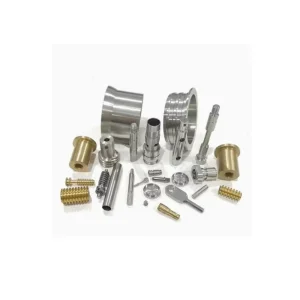
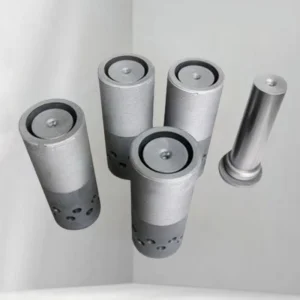
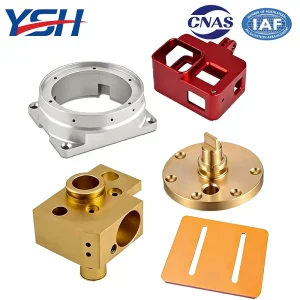
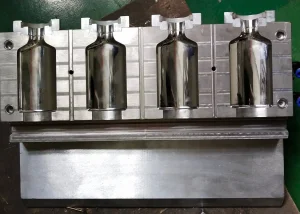
High-durability OEM custom components engineered to strict sanitary tolerances
In modern consumer packaging and food safety ecosystems, food grade custom components represent a vital subsector of automated industrial engineering. The requirements go far beyond standard metal milling. Stringent regulations enforce chemical inertness, corrosion resistance, and high-frequency sterilization resistance.
Regulatory bodies worldwide—such as the FDA (U.S. Food and Drug Administration), EC 1935/2004 (European Union), and NSF International standards—mandate that any contact surface in food processing must not release toxins, capture bacteria, or degrade under harsh thermal and chemical cleaning processes (CIP/SIP). Gemnexa CNC utilizes specialized material traces and certified milling paths to manufacture components that guarantee absolute mechanical safety and seamless cleanliness.
Whether it's ultra-precise filling nozzles, high-wear sorting cams, or custom polymer manifolds, modern food processors rely on OEM CNC suppliers to maintain production continuity and prevent catastrophic product recall liabilities.
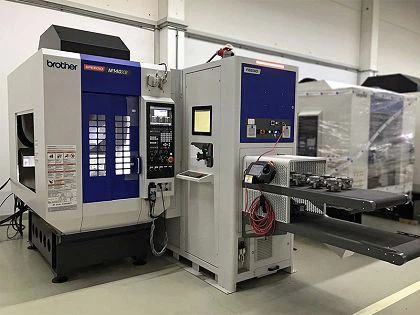
Every batch is traceable, certified, and engineered to eliminate bacterial harboring points.
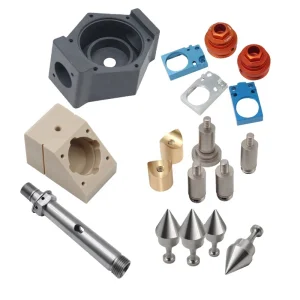
We machine highly resilient AISI 316L and 304 grade stainless steels. Offering unparalleled resistance to citric, lactic, and processing acids, combined with superior weldability and finishing performance for sterile setups.
Machining complex parts using PEEK, POM-C (Acetal/Delrin), PTFE (Teflon), and UHMW-PE. These polymers are certified for low moisture absorption, zero flavor transfer, and strong chemical agent stability during washdowns.
For custom non-contact components or high-speed heat exchangers, we work with specialized lead-free food-safe bronze and hard-anodized 6061-T6 aluminum to prevent direct product oxidation.
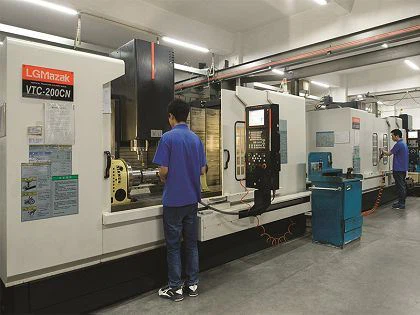
Ningbo Gemnexa CNC Co., Ltd. is strategically located in Zhejiang Province—one of China's most advanced marine-logistics and manufacturing corridors. This ecosystem delivers profound cost and engineering benefits.
Ningbo’s local industrial network guarantees raw material supply speed, high-volume tool access, and immediate logistics options via the Port of Ningbo-Zhoushan. This integration allows Gemnexa to minimize lead times by up to 40% compared to Western manufacturers.
Industrial purchasing managers, maintenance engineers, and food machine OEMs look for suppliers that can handle low-volume prototype builds as well as high-volume recurring component runs. Custom machined components must match these requirements:
| Application Scenario | Common Materials | Critical Critical Parameters | Post-Processing Requirements |
|---|---|---|---|
| Dairy & Liquid Processing | Stainless Steel 316L, PTFE | Zero crevice design, Ra < 0.4 µm | Electro-polishing, Acid Passivation |
| Beverage Bottling Systems | PET-G, Hard-anodized AL, PEEK | High wear resistance, low friction | FDA-compliant hard anodizing |
| High-Speed Packaging Lines | POM-C, Delrin, Aluminum 6061-T6 | Low rotational inertia, light weight | Precision balancing, anodizing |
| Automated Baking & Heating | Stainless Steel 304, High-temp PEEK | Thermal expansion tolerance, food-safe grease | High-temperature stabilization curing |
Gemnexa operates under a rigorous quality management system. To maintain reliability across critical fields, we employ coordinate measuring machines (CMM), optical comparators, and spectral analyzers to verify alloy compositions. Every delivery is supported by Mill Test Reports (MTR) to certify that chemical properties comply with clean environment requirements.
The convergence of automation, material science, and cleanability standards
For applications where plastic components might fragment under stress, we machine specialized blue metal-detectable acetal and PEEK, allowing standard inline X-ray or magnetic detection systems to flag contaminants before packaging.
By producing complex parts on continuous 5-axis machining systems, we eliminate the need for segmented assembly setups, preventing micro-welds and joint gaps where mold or bacteria could build up.
Modern plants are adopting sanitizing chemicals that corrode standard metals. This is shifting industry demand toward premium stainless steel grades and chemical-resistant PEEK structures.
Answers to common industry engineering, compliance, and custom ordering questions
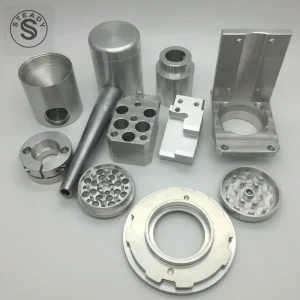
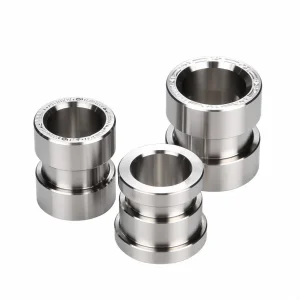
High-precision components manufactured at Ningbo Gemnexa CNC Co., Ltd.
 Gemnexa CNC