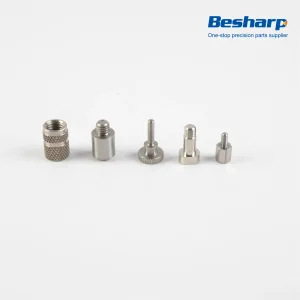
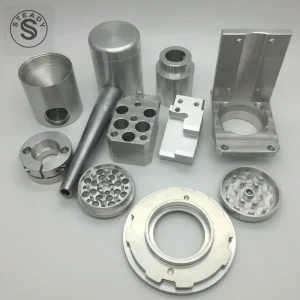
Engineered solutions designed for ultra-tight tolerances, high-volume consistency, and superior surface finishing.
Deep insight into micron-level precision, supply chain realities, and geometric complexity.
In the contemporary landscape of global industrial manufacturing, "High Tolerance" has transitioned from a specialized premium requirement to a baseline standard across critical industries. As aerospace systems push for greater efficiency, medical implants demand higher biocompatibility and seamless integration, and electric vehicles require micro-engineered powertrains, the tolerances permitted for critical components have shrunk from millimeters to single-digit microns (±0.001mm). Achieving this level of precision consistently at scale requires a deep integration of thermodynamic stabilization, tooling physics, advanced multi-axis CNC machinery, and rigorous quality control protocols.
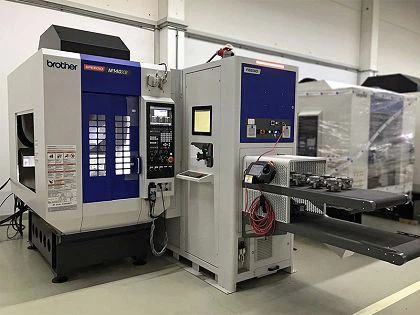
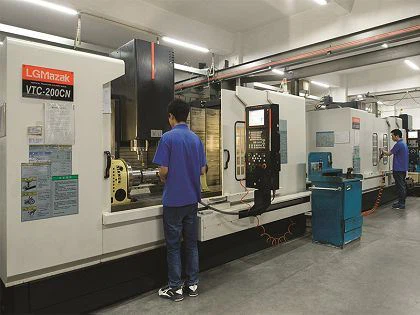
Historically, western OEMs faced a binary choice: source locally to ensure absolute quality and compliance at prohibitive cost profiles, or seek offshore manufacturing partners in Asia with the trade-off of variable quality control. Today, top-tier Chinese high-tolerance CNC factories have fundamentally rewritten this paradigm. By investing heavily in European and Japanese multi-axis machining centers (such as Hermle, DMG Mori, and Mazak) combined with localized structural material ecosystems and state-of-the-art metrology facilities (including Zeiss CMMs), these manufacturers now compete directly on engineering excellence while maintaining an agile, scalable cost footprint.
A trusted global manufacturing partner specializing in advanced custom components and tooling.
Ningbo Gemnexa CNC Co., Ltd. is a professional manufacturer and precision machining enterprise specializing in CNC machining and mould tooling, dedicated to providing high‑quality custom components and precision solutions for global industries. With a complete and scientific quality management system in place, Gemnexa CNC is recognized for its commitment to integrity, product quality, and continuous innovation in the precision machining field. The company integrates advanced CNC milling, turning, drilling, and multi‑axis machining capabilities with experienced technical teams to deliver components that meet stringent customer specifications across automotive, aerospace, electronics, medical, and industrial sectors.
Situated in the thriving manufacturing region of Ningbo, Zhejiang Province, the company operates modern facilities equipped with cutting‑edge machining centers and testing instruments to ensure consistent product excellence. Gemnexa CNC’s core services include precision CNC machining for metals and plastics, rapid prototyping, complex geometry parts, and mold fabrication. The company’s highly skilled engineers and technicians work closely with clients from design review through production to final inspection, ensuring efficient delivery and long‑term reliability.
Committed to superior craftsmanship and customer‑centric service, Ningbo Gemnexa CNC Co., Ltd. pursues excellence in every project, whether for prototype runs or large‑scale production orders. By combining advanced technology, rigorous quality control, and responsive support, Gemnexa CNC continues to build strong partnerships worldwide and serve as a trusted partner for precision manufacturing solutions.
Our localized infrastructure in Ningbo allows us direct access to high-grade industrial raw materials including aerospace-grade aluminum alloys, surgical-grade stainless steel, titanium alloys, engineering plastics (PEEK, POM-C), and red metals. Backed by a highly developed logistics port network, Gemnexa CNC guarantees compressed transit times, transparent supply routes, and absolute reliability from raw stock procurement to final custom clearance delivery.
Why modern global supply networks rely on China's industrial clusters for precision engineering.
In manufacturing hubs like Ningbo and Shenzhen, raw material suppliers, specialized surface treatment labs, heat-treatment facilities, and logistics centers operate within a 50km radius. This dense localization eliminates delays and drastically reduces transit times for complex multi-process parts.
Whether you require single-unit high-precision prototypes or recurring production runs of 100,000 units, Chinese factories provide unmatched scaling speed. Advanced tooling preparation and flexible shift allocation allow for agile scaling without prohibitive capital investments.
China's educational pipelines produce hundreds of thousands of specialized manufacturing engineers annually. These professionals are well-versed in complex CAD/CAM modeling, dynamic cutting simulation, toolpath optimization, and Geometric Dimensioning and Tolerancing (GD&T).
Translating micron-level engineering into real-world performance for pioneering industries.
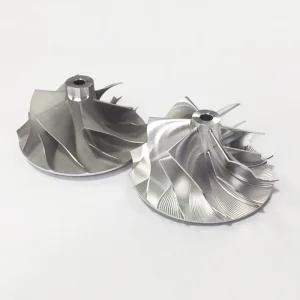
Aerospace components, such as impellers, compressor stages, and turbine housings, demand flawless dynamic balance at extremely high RPMs. A tiny geometric error can cause disastrous harmonic vibrations. Utilizing simultaneous 5-axis CNC machining, we generate complex, non-symmetrical blade surfaces with continuous profiles and precise surface finishes down to Ra 0.4 μm, reducing aerodynamic losses and extending engine lifespans.
Medical manufacturing demands bio-compatibility and extreme structural precision. Bone plates, joint replacements, and endoscope surgical instruments constructed from Ti-6Al-4V (Grade 5 Titanium) or medical-grade 316L Stainless Steel are machined on high-speed CNC centers. Our processes ensure burr-free microscopic details and precise threads, adhering strictly to cleanroom-ready standards to prevent post-surgical complications.
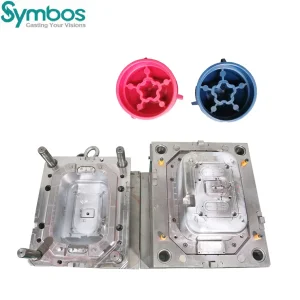
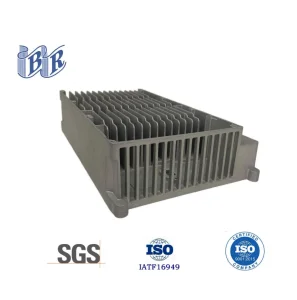
The global shift to electric vehicles (EVs) requires highly efficient electric motors and thermal management systems. Die-cast aluminum cold air housings and custom intake system molds must feature flawless sealing mating surfaces. Our precision-engineered molds and tooling elements ensure high-volume consistency, minimizing thermal leakage and maximizing battery safety across millions of production units.
Unmanned Aerial Vehicles (UAVs) and robotic limbs demand an optimal strength-to-weight ratio. Structurally complex carbon-fiber and aircraft-grade aluminum brackets, arm mechanisms, and motor mounts must be machined thin yet robust. By utilizing ultra-high-speed milling techniques and custom jig fixtures, we maintain wall thicknesses of less than 0.8mm while avoiding structural warping or deformation.
Essential criteria to evaluate and minimize supply chain risks in precision CNC manufacturing.
When selecting a high-tolerance CNC exporter in China, strategic buyers must look beyond basic unit pricing. To protect your operations from quality defects and delayed timelines, you must assess several critical structural pillars:
How cutting-edge technological integration is shaping the future of industrial-scale precision CNC machining.
The subtractive manufacturing landscape is undergoing a digital revolution. Traditional manual setups are being replaced by smart manufacturing cells where machines communicate in real-time. By utilizing digital twin technology, engineers can simulate cutting processes virtually before starting physical production. This predictive modeling identifies potential tool collisions, chatter, and workpiece deformations, optimizing cycle times and conserving premium raw materials.
Additionally, modern CNC machines incorporate closed-loop probing systems. These system probes measure the workpiece on the machine bed during the cycle and auto-compensate for tool wear in real-time. This level of automation enables lights-out manufacturing, where machines run overnight without human intervention, maintaining micron-level precision across thousands of parts.
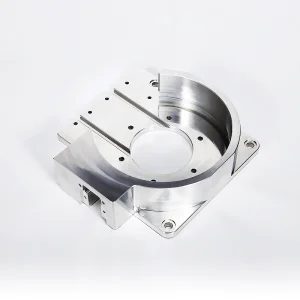
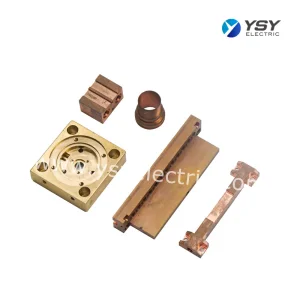
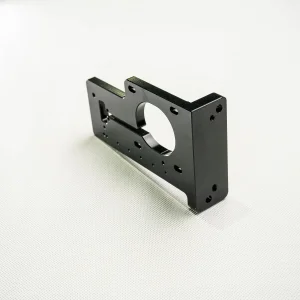
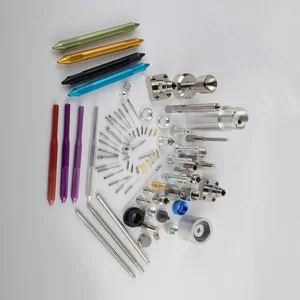
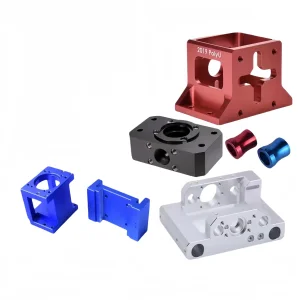
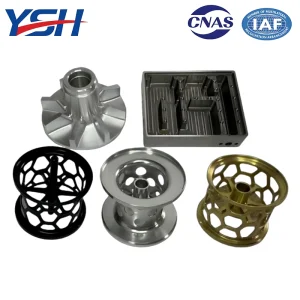
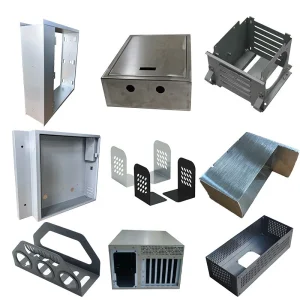
Explore our extensive range of high-precision components, tooling fixtures, and customized system elements.
Expert answers to your technical questions regarding tolerances, logistics, and capabilities.
 Gemnexa CNC