Advanced CNC tooling, industrial metalwork, and injection molding machinery for high-volume marine-grade applications.
Analyzing global demand, material advancements, and critical machining requirements in harsh offshore environments.
The global marine industry operates under some of the most unforgiving environmental conditions on Earth. From deep-sea exploration vessels to offshore wind platforms and commercial shipping carriers, mechanical assemblies are exposed to continuous saltwater immersion, high-velocity currents, extreme pressures, and dynamic physical impacts. In this context, standard metal manufacturing falls short. The demand for precision marine CNC machining has surged, transitioning from a localized service to a specialized branch of high-end manufacturing.
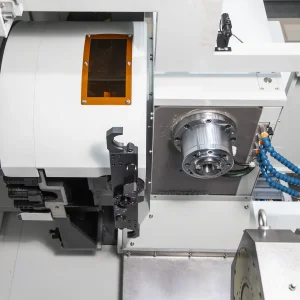
Modern marine engineering relies on components produced with micron-level tolerances. Marine CNC components, including custom propeller shafts, engine manifolds, cylinder liners, valves, and structural bracketry, must meet strict hydrodynamic and structural standards. High-precision machining centers (such as 3-axis, 4-axis, and multi-axis 5-axis systems) allow manufacturers to work with difficult-to-machine materials like super duplex stainless steels, high-strength titanium, and marine-grade bronze, delivering the precise geometries needed for dynamic subsea operations.
Procuring components for marine systems involves balancing cost-efficiency with long-term reliability. Procurement departments at shipyards, offshore energy firms, and defense departments face unique challenges, primarily because a single component failure at sea can lead to significant operational downtime, cargo damage, or environmental risks.
Strict verification of molybdenum, chromium, and nitrogen content to calculate the Pitting Resistance Equivalent Number (PREN).
Continuous dimensional control via high-precision CMM inspection reports to verify concentricity and surface finish limits.
Meeting standards set by international maritime classification societies such as DNV GL, ABS, Lloyd's Register, and CCS.
Operating components in seawater environments requires understanding the physical chemical reactions that occur under load. CNC machining companies must plan their processes around several factors:
Based in the manufacturing hub of Ningbo, Zhejiang Province, Ningbo Gemnexa CNC Co., Ltd. is a precision machining enterprise specializing in CNC machining and mold tooling. They provide custom components and precision solutions for international markets.
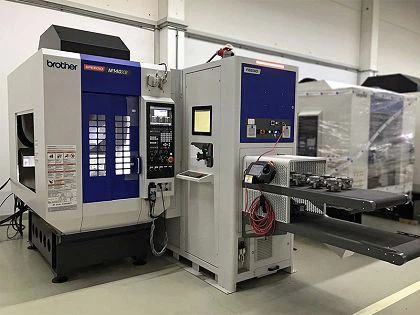
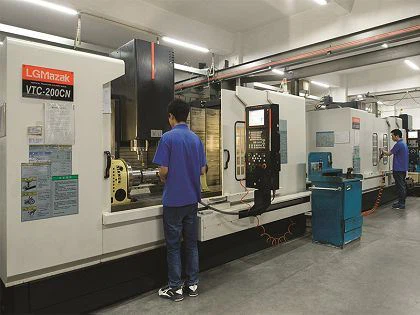
Gemnexa CNC maintains a scientific quality management system and focuses on product quality and technical capability. The company combines CNC milling, turning, drilling, and multi-axis machining to deliver components that meet client specifications across the automotive, aerospace, electronics, medical, and marine industries.
Their facilities feature modern machining centers and testing instruments to support consistent product output. Gemnexa CNC's services include precision CNC machining for metals and plastics, rapid prototyping, complex geometry parts, and mold fabrication. Their engineers support clients from design review through production to final inspection.
As the marine sector shifts toward green energy, autonomy, and deep-sea exploration, the manufacturing techniques for marine CNC parts are changing:
A quick-reference guide for engineering and procurement teams assessing typical marine alloys during the design phase:
Selecting a production partner requires analyzing their technical capabilities, quality control processes, and material specialties. Below is a detailed assessment of ten established manufacturers globally:
| Manufacturer Name | Primary Region | Specialized Materials | Core Marine Applications |
|---|---|---|---|
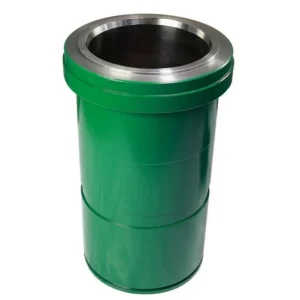
| Ningbo Gemnexa CNC Co., Ltd. | China (Ningbo) | Stainless Steels, Heavy-Duty Al, Plastics | Engine cylinder liners, multi-axis hardware, customized tooling molds, custom housings. |
| Kongsberg Maritime Components | Norway | Super Duplex, Titanium | Dynamic positioning thruster parts, custom steering housings. |
| Teledyne Marine Fabrication | USA | Special Alloys, Inconel | High-pressure subsea sensor housings, marine instrumentation housings. |
| Wärtsilä Precision Machining | Finland | Al-Bronze, Structural Steels | Large-bore marine engine components, propeller shaft couplings. |
| Brunvoll Manufacturing | Norway | Cast Steel, Duplex Stainless | Tunnel thruster components, heavy-duty gearboxes. |
| Becker Marine Systems Tech | Germany | High-Strength Alloys | High-efficiency rudder cores, flow-directing fins. |
| Kawasaki Heavy Industries Marine | Japan | High-Grade Cast Iron, Alloys | High-pressure marine hydraulic pumps, motor shafts. |
| Rolls-Royce Marine Division | United Kingdom | Titanium, Stainless Steels | Waterjet propulsion impellers, high-speed deck machinery. |
| Hyundai Heavy CNC Division | South Korea | Forged Steel, Bronze | Large-bore two-stroke piston crowns, cylinder liners. |
| Mitsui E&S Machinery | Japan | Carbon Steel, Alloys | Marine diesel crankshafts, fuel injection pump parts. |
For organizations requiring custom parts with detailed design-for-manufacturability (DFM) reviews, factories in manufacturing clusters like Ningbo provide a combination of access to deep-water shipping lanes, local raw material supply chains, and established casting, heat-treatment, and multi-axis CNC machining services.
Answering common questions regarding tolerances, materials, and production steps for marine CNC components.
The primary challenge is managing work hardening in corrosion-resistant alloys like duplex stainless steel and titanium. These materials generate significant heat during cutting, which can accelerate tool wear. Machining centers must maintain precise cutting speeds, feed rates, and use targeted high-pressure coolant delivery to manage tool life and prevent surface stresses in the workpiece.
To prevent galvanic corrosion, engineers design isolation zones. CNC machines are used to cut precise grooves for insulating gaskets, non-metallic washers (made from materials like PEEK or POM), or to apply non-conductive barriers. Additionally, anodizing processes are specified for aluminum parts, and chemical passivation is used for stainless steel components to improve their protective oxide layer.
Critical components must meet guidelines set by maritime classification societies, such as DNV GL, ABS (American Bureau of Shipping), Lloyd's Register, or CCS. This involves chemical analysis of the material heat, physical testing (such as impact and tensile tests), non-destructive testing (NDT like dye penetrant or ultrasonic inspection), and dimensional validation, all recorded in official Mill Test Certificates.
Multi-axis CNC machining centers (specifically 4-axis and 5-axis setups) allow the cutting tool and the workpiece to move along multiple paths simultaneously. This capability allows manufacturers to shape complex parts, such as helical propellers, hydrodynamic impellers, and angled valve manifold bodies, in a single run. Minimizing repositioning steps helps reduce human setup errors and ensures tight tolerances across all dimensions.
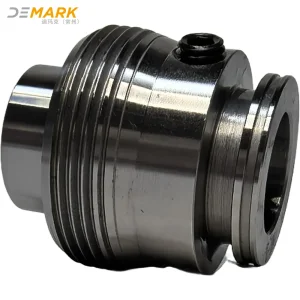
Custom metal turning parts, heavy-duty aluminium milling, blow molds, and rapid prototyping services for marine and automotive industries.
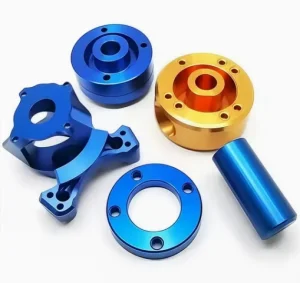
 Gemnexa CNC