
A technological assessment of global manufacturing standards, engineering challenges, and geopolitical shifts driving demand for high-spec downhole and subsea components.
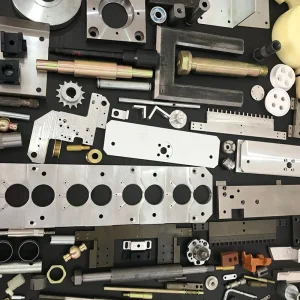
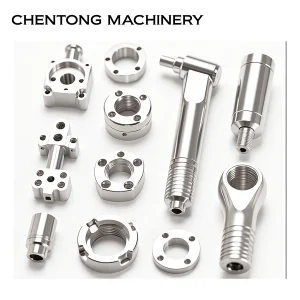
The global oil and gas sector operates in some of the most unforgiving environments on Earth. From deepwater subsea extraction sites in the Gulf of Mexico and the North Sea to high-temperature, high-pressure (HTHP) onshore reservoirs in the Middle East, the components utilized must withstand extreme physical stresses. High-precision machined parts like casing hangers, artificial lift components, manifold blocks, and downhole assembly tools form the core of modern energy infrastructure.
As sweet crude fields deplete, exploration has turned toward sour gas reservoirs characterized by high concentrations of hydrogen sulfide (H₂S) and carbon dioxide (CO₂). These corrosive agents induce sulfide stress cracking (SSC) and hydrogen embrittlement. Consequently, components must be machined from advanced metallurgy, demanding specialized tooling capabilities and deep thermal processing expertise.
Recent supply chain disruptions have fundamentally altered procurement strategies. Energy majors no longer rely solely on single-source contracts. A shift toward "China+1" sourcing strategies, combined with deep technical auditing, has positioned precision manufacturers in manufacturing hubs like Ningbo to play a pivotal role. The focus has moved from cost-cutting to uncompromising compliance with API standards (specifically API 6A and 17D) and ISO certifications.
An evaluation of material selection criteria for machined parts subjected to high mechanical loads and aggressive chemical interfaces.
In high-consequence environments, material failure can lead to severe environmental and financial catastrophes. The industry demands rigid raw material validation protocols. Premium mills must supply fully traceable raw billets, which undergo strict inspection including Positive Material Identification (PMI), ultrasonic testing, and heat-treatment certification before machining operations begin.
Multi-axis milling and high-speed CNC turning generate internal residual stresses in superalloys and plastics. Without specialized annealing and stress-relieving thermal cycles post-machining, parts like PEEK washers or Duplex valve bodies can warp, compromising seal integrity at high pressures.
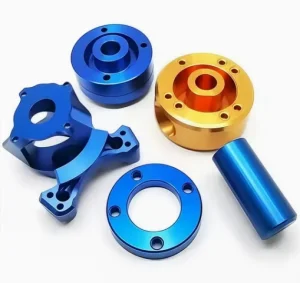
Enhancing corrosion and wear resistance involves advanced surface engineering. CNC components often undergo chemical conversion coating, hard-anodizing (for aluminum parts), phosphate coating, electropolishing, or physical vapor deposition (PVD) to maximize life cycles in highly dynamic operating environments.
Evaluating Gemnexa's technical integration, engineering standards, and manufacturing facilities in the precision machining ecosystem.
Ningbo Gemnexa CNC Co., Ltd. is a professional manufacturer and precision machining enterprise specializing in CNC machining and mould tooling, dedicated to providing high‑quality custom components and precision solutions for global industries. With a complete and scientific quality management system in place, Gemnexa CNC is recognized for its commitment to integrity, product quality, and continuous innovation in the precision machining field. The company integrates advanced CNC milling, turning, drilling, and multi‑axis machining capabilities with experienced technical teams to deliver components that meet stringent customer specifications across automotive, aerospace, electronics, medical, and industrial sectors.
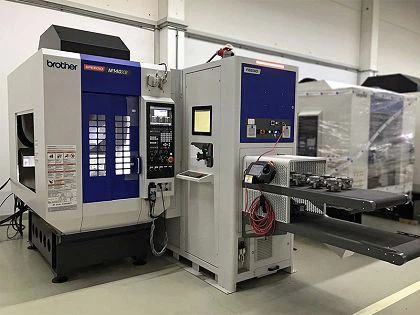
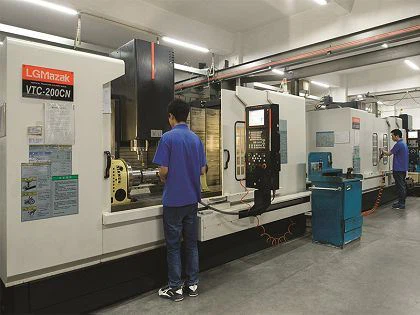
Situated in the thriving manufacturing region of Ningbo, Zhejiang Province, the company operates modern facilities equipped with cutting‑edge machining centers and testing instruments to ensure consistent product excellence. Gemnexa CNC’s core services include precision CNC machining for metals and plastics, rapid prototyping, complex geometry parts, and mold fabrication. The company’s highly skilled engineers and technicians work closely with clients from design review through production to final inspection, ensuring efficient delivery and long‑term reliability.
Committed to superior craftsmanship and customer‑centric service, Ningbo Gemnexa CNC Co., Ltd. pursues excellence in every project, whether for prototype runs or large‑scale production orders. By combining advanced technology, rigorous quality control, and responsive support, Gemnexa CNC continues to build strong partnerships worldwide and serve as a trusted partner for precision manufacturing solutions.
How specialized machining workflows address specific operational challenges in extraction, transport, and refining.
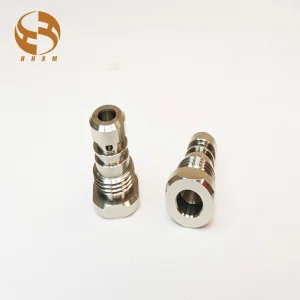
Downhole telemetry, Logging-While-Drilling (LWD), and Measurement-While-Drilling (MWD) tools require complex internal geometries to house high-sensitivity electronic sensors. Machining non-magnetic drill collars and beryllium copper transmitter components requires precise CNC configurations. These parts operate in severe vibrational and high-shock downhole conditions, making mechanical integrity critical.
Subsea production systems, located thousands of meters below sea level, must operate without maintenance for up to 25 years. Precision-machined metal-to-metal seal seats, gate valve components, and hydraulic coupling bodies must resist marine biofouling and seawater corrosion. Inconel 625 cladding and super duplex steels are machined to micro-inch tolerances to ensure zero leakage.
Downstream refining processes involve abrasive catalyst slurries and corrosive hydrocarbon fractions. Pump impellers, mechanical seals, and flow control throttle plates must resist cavitation, erosive wear, and high temperatures. CNC multi-axis milling enables the production of complex hydraulic profiles on tough-to-machine alloys like Stellite and Hastelloy.
The convergence of automation, digital verification, and hybrid additive-subtractive manufacturing in the precision machining ecosystem.
Integration of multi-axis machining centers (mill-turn units) that finish complex geometry parts in a single set-up. This minimizes positioning errors and increases dimensional stability in deepwater components.
Adoption of automated on-machine probing integrated with Coordinate Measuring Machines (CMM). Digital inspection data is linked to part batch records, ensuring 100% compliance with geometric dimensioning and tolerancing (GD&T) standards.
Combining 3D metal deposition (Direct Energy Deposition) with subsequent high-precision CNC machining. This technique allows local superalloy cladding on high-wear surfaces of structural carbon steel bodies, optimizing cost and performance.
AI-driven predictive tool wear monitoring and adaptive cutting feed rate optimization. This mitigates sub-surface micro-cracking in sensitive aerospace-grade and oil-and-gas-grade alloys.
Technical answers to key engineering and procurement queries in the energy machining sector.
The oil and gas industry relies heavily on standards defined by the American Petroleum Institute (API), including API Spec 6A for wellhead and Christmas tree equipment, API 16A for drill-through equipment, and API 17D for subsea applications. ISO 9001 and AS9100 are also critical for overall manufacturing quality management systems.
These materials provide resistance to hostile environments. Inconel 718 maintains mechanical strength and corrosion resistance under high temperatures and high pressures (HTHP). PEEK offers chemical inertness, high mechanical strength, and electrical insulation properties, which are critical for LWD/MWD electrical insulators and washers.
Advanced manufacturers routinely maintain dimensional tolerances between ±0.005mm and ±0.01mm for critical sealing areas, O-ring grooves, and thread profiles. Precision thread machining (such as rotary shoulder connections or premium gas-tight casing joints) must be controlled carefully to prevent galling and leakage under high tension.
Ningbo Gemnexa uses a scientific quality management system. From initial raw material testing (PMI and ultrasonic inspection) to final verification via Coordinate Measuring Machines (CMM), every manufacturing step is logged. This ensures traceability and consistency for both prototypes and large production runs.
Treatments like hard anodizing, electroless nickel plating, and tungsten carbide thermal spray coatings increase hardness and corrosion resistance. These barriers limit galvanic corrosion, erosion by sand and abrasive slurries, and chemical degradation in sour gas operations.
Ningbo offers a highly developed manufacturing ecosystem, raw material access, precision tooling supply chains, and deep-water shipping infrastructure. Sourcing from this region reduces lead times and costs while maintaining technical compliance with global engineering standards.
 Gemnexa CNC