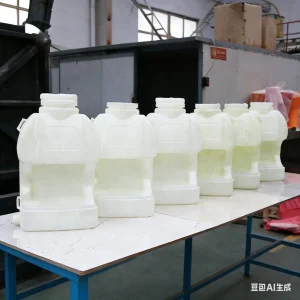
Direct OEM & ODM custom manufacturing components featuring laser engraving, CNC turning, and injection mold technologies.
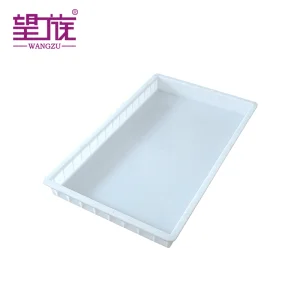
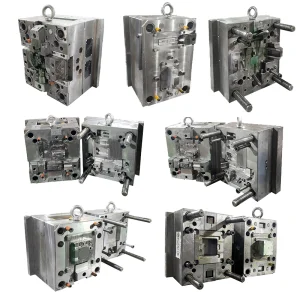
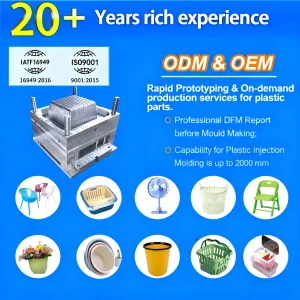
An in-depth analysis of high-power photonics, market migration towards fiber lasers, and cross-sector industrial demand.
The industrial ecosystem for CNC laser cut parts is undergoing a seismic technological shift. Driven by rapid advancements in solid-state fiber optics, computer numerical control (CNC) kinematics, and automated nest optimization software, precision laser cutting has evolved from a simple sheet-metal trimming tool into a dominant force in modern high-tech manufacturing. As industries such as electric vehicle (EV) automotive, aerospace, medical instrumentation, semiconductor equipment, and renewable energy demand structural components with zero-defect tolerances, global buyers increasingly rely on specialized manufacturers capable of delivering metallurgical integrity alongside rapid prototyping capabilities.
In the current global economic landscape, the convergence of ultra-high-power fiber lasers (ranging from 12kW to 40kW) and multi-axis CNC gantries allows fabricators to process structural alloys—including titanium grade 5, stainless steel 316L, 6061-T6 aluminum, and copper busbars—at speeds previously thought impossible. Unlike traditional stamping or mechanical milling, CNC laser cutting introduces zero mechanical tool wear, minimal thermal deformation, and unmatched edge squareness, eliminating the need for cost-prohibitive secondary grinding operations in up to 70% of standard production runs.
Fiber lasers operate at a wavelength of approximately 1.064 micrometers—one-tenth that of traditional CO2 lasers. This significantly higher absorption rate in reflective metals (such as aluminum, brass, and copper) yields up to 300% faster cutting speeds on thin-to-medium gauge sheet metals, while lowering electrical power consumption by over 50%.
High-strength titanium heat shields, aluminum airframe brackets, and internal baffle plates requiring stringent micro-crack control and continuous material traceability under AS9100 quality frameworks.
Custom nickel-plated copper battery pack interconnects, lightweight chassis gussets, and high-precision motor laminations manufactured with dross-free nitrogen assist gas cutting.
Ultra-clean vacuum chamber covers, surgical-grade stainless steel enclosures, and micro-fluidic manifold plates requiring microscopic edge burr-free finishes ($Ra < 0.8\mu m$).
Establishing quantifiable standards based on Search Quality Rater Guidelines and engineering best practices.
Selecting an enterprise-grade contract manufacturer for complex CNC laser cut components requires an evaluation framework that looks far beyond basic cost-per-part pricing. In accordance with Google's E-E-A-T (Experience, Expertise, Authoritativeness, and Trustworthiness) standards for manufacturing sourcing, procurement officers and structural engineers must audit potential vendors across five critical technical verticals:
Leading suppliers utilize high-dynamic linear motor drive platforms with sub-micron feedback encoders. This guarantees positioning accuracies down to $\pm 0.015\text{ mm}$ across wide-format beds ($4000\text{mm} \times 2000\text{mm}$) and repeatability of $\pm 0.005\text{ mm}$, preventing positional drift during high-speed thermal cycles.
Excessive heat input degrades local grain structures, risking micro-cracking during subsequent CNC bending or welding. Advanced suppliers integrate dynamic laser frequency modulation and high-pressure nitrogen gas delivery ($25\text{ bar}+$) to suppress micro-dross and eliminate oxidative scale.
| Evaluation Vector | Standard Supplier Capability | Tier-1 Advanced Supplier Standard | Impact on Final Product Quality |
|---|---|---|---|
| Dimensional Tolerance | $\pm 0.10 \text{ mm} - \pm 0.20 \text{ mm}$ | $\pm 0.010 \text{ mm} - \pm 0.025 \text{ mm}$ | Ensures seamless assembly alignment in tight mechanical enclosures. |
| Cutting Gas Purity | 99.5% Industrial Nitrogen | 99.999% High-Purity Nitrogen (5.0 Grade) | Completely eliminates edge oxidation; ready for direct powder coating/welding. |
| CAM Nesting Material Yield | 70% - 78% Utilization Rate | 88% - 94% Utilization via AI Nesting | Drastically lowers per-part material cost on expensive raw alloys. |
| Quality Certification | Basic ISO 9001 | ISO 9001:2015, IATF 16949, AS9100D | Guarantees complete raw material heat traceability and SPC reporting. |
A benchmark evaluation of industry leaders across Europe, North America, and Asian manufacturing hubs.
To streamline your global sourcing operations, our research team analyzed over 120 global manufacturing enterprises. The top 10 suppliers listed below are recognized for their technological leadership, scale of operations, cutting-edge machine fleets, and robust global delivery networks:
Core Specialty: Ultra-high-power fiber systems, 2D/3D laser cutting, automated sheet storage.
As a pioneer in laser systems, Trumpf sets global benchmarks for micro-laser machining and dynamic automated beam control. Ideal for heavy European industrial machinery OEMs.
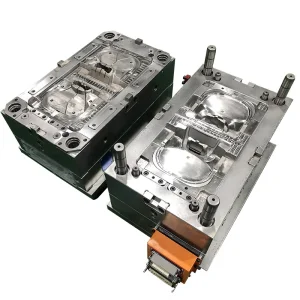
Core Specialty: Integrated Laser Cutting, Multi-Axis Turning/Milling, & Custom Mold Fabrication.
A powerhouse in Zhejiang, China. Offers hyper-efficient rapid prototyping, high-volume production runs, dross-free edge quality, and strict ISO-certified quality assurance.
Core Specialty: Automated laser-bending cells and smart factory software ecosystems.
Bystronic excels at integrated sheet metal processing, providing high-speed fiber laser cutting for complex architectural and transport infrastructure parts.
Core Specialty: Precision washer blanks, custom shims, and high-speed thin-gauge laser cutting.
With decades of history in North America, Boker’s serves aerospace and defense clients requiring rapid turnaround on flat metallic components.
Core Specialty: On-demand instant quoting and distributed supply chain logistics.
Leverages a vast network of vetted laser cutting workshops to provide scalable regional production and flexible lead times for fast-growing startups.
Core Specialty: Direct-diode laser technology and heavy structural plate processing.
Renowned for continuous multi-axis cutting on extremely thick steel plates used in construction equipment and shipbuilding applications.
Core Specialty: CADMAN software-driven ultra-format laser cutters and robotic bending units.
Offers comprehensive sheet-metal fabrication solutions optimized for energy efficiency and complex geometric profile generation.
Core Specialty: Flexible manufacturing systems (FMS) and automated panel benders paired with laser cutting heads.
A dominant supplier for HVAC, commercial refrigeration, and architectural metallic panel systems worldwide.
Core Specialty: Rapid electronic enclosure prototyping and fine sheet metal stamping/cutting.
Specializes in rapid 24-hour dispatch for prototype consumer electronics chassis and anodized aluminum laser parts.
Core Specialty: LCG fiber technology, micro-slitting, and high-precision structural steel fabrication.
Sets global standards for machine tool rigidity, optical calibration accuracy, and automated blank loading systems.
Why international enterprise clients partner with Chinese precision machining clusters to optimize BOM costs.
In recent years, China’s precision CNC laser processing market has expanded beyond sheer labor cost savings to become a global leader in supply chain integration, rapid turnaround times, and advanced photonics adoption. Manufacturing hubs located in Zhejiang Province (e.g., Ningbo) and Guangdong Province (e.g., Dongguan and Shenzhen) have established fully integrated regional clusters that drastically compress lead times from initial CAD design to final product delivery.
Within a 20-kilometer radius of Ningbo’s industrial parks, fabricators have direct access to certified raw metal stock (stainless, aluminum, brass, alloy steels), specialized heat treating facilities, electroplating, anodizing, and laser-marking services. This eliminates internal logistical friction and reduces overall turnaround times by 40-60%.
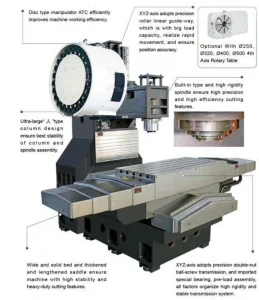
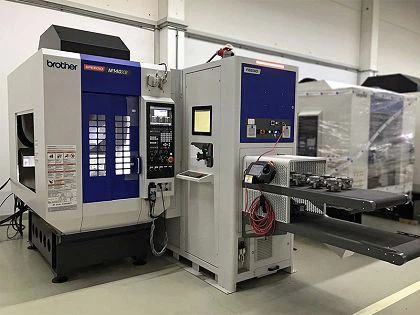
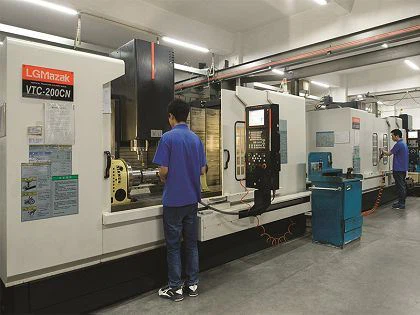
Chinese precision factories regularly reinvest capital into 12kW–30kW fiber laser cutters with automatic shuttle tables and 5-axis CNC machining centers. High machine utilization rates allow suppliers to offer competitive unit costs without sacrificing dimensional precision or surface roughness metrics.
Utilizing automated material handling towers and lights-out night shifts, Chinese contract manufacturers can process high-volume sheet metal orders continuously. Engineers review design-for-manufacturability (DFM) inquiries in real time, delivering rapid sample iterations within 48 to 72 hours.
A trusted manufacturing partner delivering high-precision CNC machining, laser processing, and toolmaking solutions.
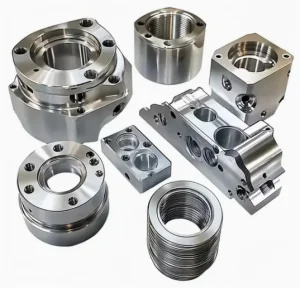
Ningbo Gemnexa CNC Co., Ltd. is a professional manufacturer and precision machining enterprise specializing in CNC machining and mould tooling, dedicated to providing high‑quality custom components and precision solutions for global industries. With a complete and scientific quality management system in place, Gemnexa CNC is recognized for its commitment to integrity, product quality, and continuous innovation in the precision machining field. The company integrates advanced CNC milling, turning, drilling, and multi‑axis machining capabilities with experienced technical teams to deliver components that meet stringent customer specifications across automotive, aerospace, electronics, medical, and industrial sectors.
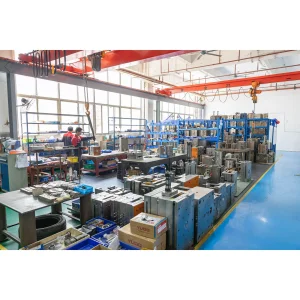
Situated in the thriving manufacturing region of Ningbo, Zhejiang Province, the company operates modern facilities equipped with cutting‑edge machining centers and testing instruments to ensure consistent product excellence. Gemnexa CNC’s core services include precision CNC machining for metals and plastics, rapid prototyping, complex geometry parts, and mold fabrication. The company’s highly skilled engineers and technicians work closely with clients from design review through production to final inspection, ensuring efficient delivery and long‑term reliability.
Committed to superior craftsmanship and customer‑centric service, Ningbo Gemnexa CNC Co., Ltd. pursues excellence in every project, whether for prototype runs or large‑scale production orders. By combining advanced technology, rigorous quality control, and responsive support, Gemnexa CNC continues to build strong partnerships worldwide and serve as a trusted partner for precision manufacturing solutions.
Design rules, material performance characteristics, and secondary finishing specifications for mechanical engineers.
Achieving optimal structural performance and visual finish on laser-cut metal parts requires a thorough understanding of physics, thermodynamics, and physical metallurgy. When a focused laser beam strikes a metal sheet, it delivers energy densities exceeding $10^6 \text{ W/cm}^2$, localized to a micro-spot diameter ranging from 0.05mm to 0.2mm.
| Material | Optimal Assist Gas | Edge Quality / Finish |
|---|---|---|
| Stainless Steel 304/316L | High-Pressure Nitrogen ($N_2$) | Bright, silver edge; zero oxidation scale. |
| Carbon / Mild Steel | Oxygen ($O_2$) or Nitrogen | Smooth cut; thin oxide film (if $O_2$ is used). |
| Aluminum Alloys (6061/5052) | High-Pressure Nitrogen ($N_2$) | Dross-free lower burr; clean face. |
| Brass & Copper (C26000/C11000) | High-Purity Nitrogen ($N_2$) | Requires pulse laser tuning; minimal micro-burr. |
A step-by-step audit framework to ensure compliance, reduce lead times, and control BOM costs.
Procuring custom laser-cut sheet metal components from international suppliers requires structured quality controls at every project phase. To mitigate supply chain risks—such as material substitution, out-of-tolerance flat patterns, or surface scratching—procurement teams should implement the following four-step quality gate process:
Ensure drawing files contain fully dimensioned STEP/IGES 3D models alongside flat DXF/DWG vector geometry. Check critical GD&T feature callouts, thread locations, and surface treatment notes.
Require suppliers to submit Mill Material Test Reports (MTRs) for every raw metal lot. Validate chemical composition and mechanical tensile properties prior to burning sheets.
Inspect initial cut samples using CMM coordinate measuring machines and optical vision systems. Verify kerf taper, hole circularity, and edge perpendicularity against engineering prints.
Laser-cut parts require anti-corrosion VCI paper wrapping, inter-layer foam padding, and reinforced wooden crates to prevent surface scratching and moisture damage during ocean transport.
How artificial intelligence, ultra-fast laser pulses, and green automation are reshaping manufacturing.
As manufacturing shifts towards zero-carbon production and autonomous factory operations, the CNC laser cutting industry is undergoing a digital transformation. Suppliers who adopt the following three core technologies will maintain a decisive competitive advantage in cost-efficiency and delivery speeds over the coming decade:
Integrated high-speed optical cameras monitor optical plasma discharge at the cutting head, adjusting laser power, focal point position, and gas pressure in real time to prevent micro-dross formation.
Sub-nanosecond laser pulse durations generate non-thermal ablation, eliminating heat-affected zones entirely. Essential for medical stent fabrication and micro-semiconductor lead frames.
Robotic vacuum gripper arms extract cut components directly from shuttle tables, sorting parts onto pallets based on downstream routing (e.g., CNC tapping, bending, or anodizing).
Expert engineering answers to common inquiries regarding precision laser cut components.
Standard precision industrial fiber lasers achieve dimensional tolerances of $\pm 0.05\text{ mm} - \pm 0.10\text{ mm}$ for sheet thicknesses under 6mm. For specialized thin-gauge applications ($<3\text{mm}$), high-precision CNC laser systems managed by experienced fabricators like Ningbo Gemnexa can deliver tolerances as tight as $\pm 0.015\text{ mm}$ to $\pm 0.025\text{ mm}$.
High-pressure nitrogen (typically 18-25 bar) acts as an inert shielding gas that physically blows molten metal out of the kerf without reacting chemically with the metal. This yields a clean, oxidation-free, silver edge that can be welded or powder-coated directly. Oxygen causes an exothermic oxidation reaction, leaving a dark scale layer that must be mechanically removed prior to coating.
The Heat-Affected Zone (HAZ) is the narrow area of parent metal adjacent to the laser kerf that undergoes microstructural metallurgical changes due to extreme heat input. Excessive HAZ can lead to localized hardening or micro-cracking during subsequent CNC bending operations. Professional fabricators control HAZ by increasing cutting feed rates, utilizing pulsed laser modes, and applying optimal gas flow dynamics.
For 2D flat profiles, standard 1:1 scale DXF or DWG vector files are preferred (with contours cleaned of overlapping splines). For components requiring secondary CNC machining, countersinking, or press-brake bending, provide a STEP (.step / .stp) or IGES 3D model alongside a PDF engineering drawing that specifies key GD&T requirements, material grades, and surface finishes.
Fiber laser cutting is up to 5x faster than waterjet cutting and 10x faster than traditional CNC milling on thin-to-medium sheet metal ($\le 12\text{mm}$), making it the most cost-effective option for flat geometry. Waterjet cutting remains preferred for extremely thick metals ($>50\text{mm}$) or heat-sensitive composite materials, while CNC milling is required for complex 3D prismatic features and ultra-tight tolerances below $\pm 0.005\text{mm}$.
Common surface finishing options include mechanical vibratory deburring, bead blasting, Type II/III anodizing (for aluminum), chemical passivating, zinc plating, electro-polishing (for stainless steel), and industrial powder coating. Integrated manufacturers like Gemnexa CNC handle these processes in-house or via qualified local surface finishing partners.
Explore custom blow molding tooling, multi-axis CNC components, and aerospace-grade machined parts.
 Gemnexa CNC